St Patrick's Catholic Primary School
Number and Place Value
Year 1
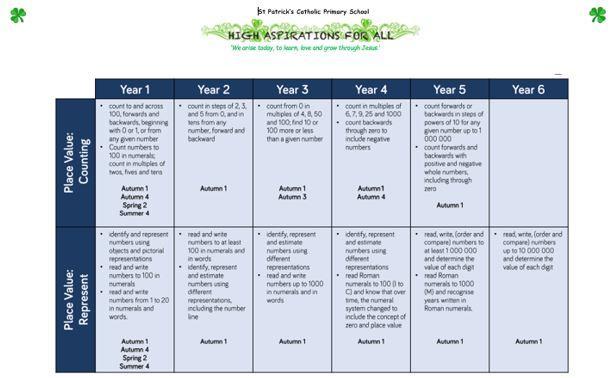
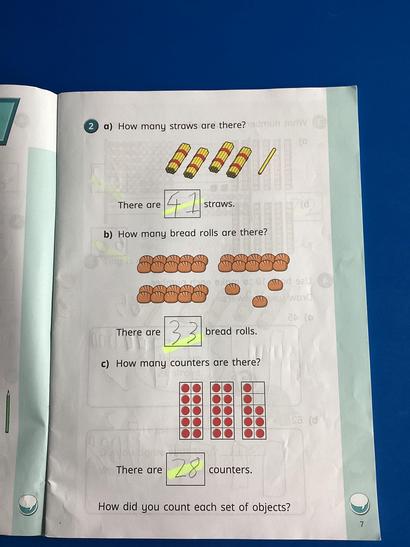
- Count to and across 100, forwards and backwards, beginning with 0 or 1, or from any given number.
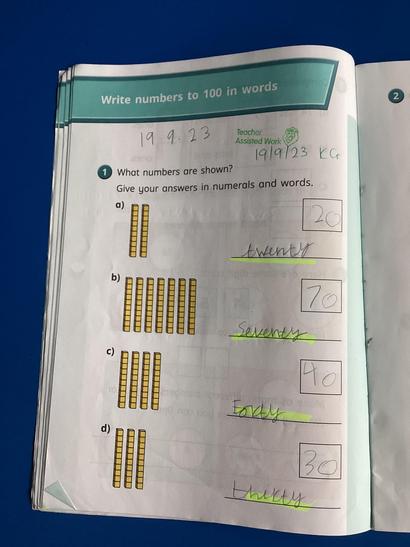
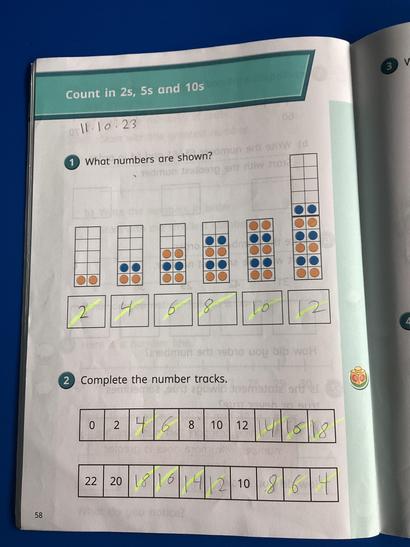
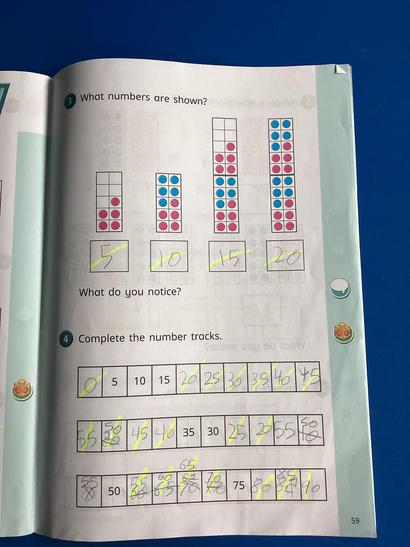
- Count, read and write numbers to 100 in numerals; count in multiples of twos, fives and tens.
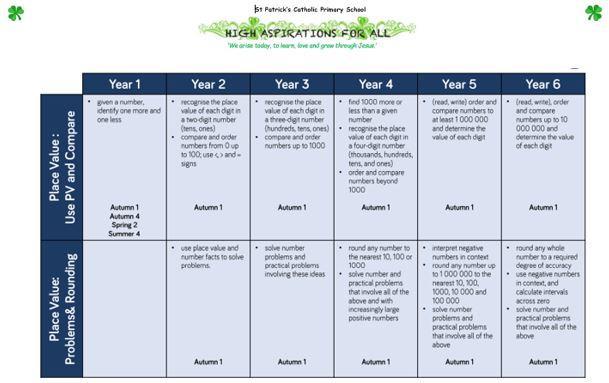
- Given a number, identify one more and one less.
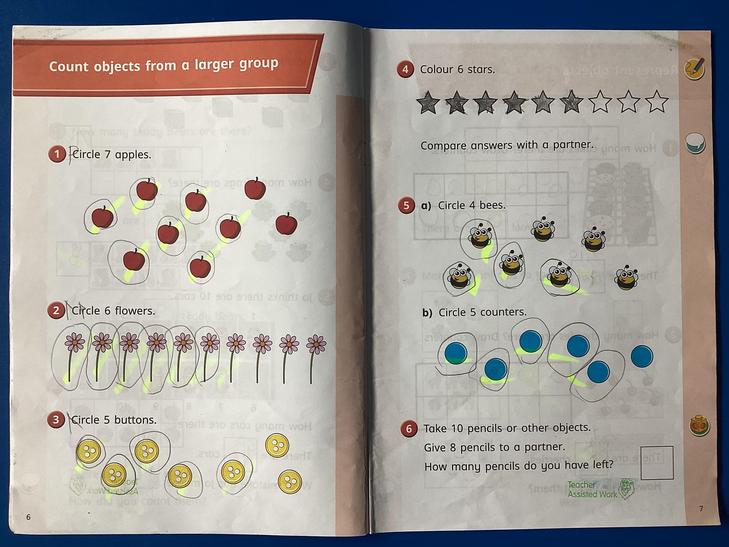
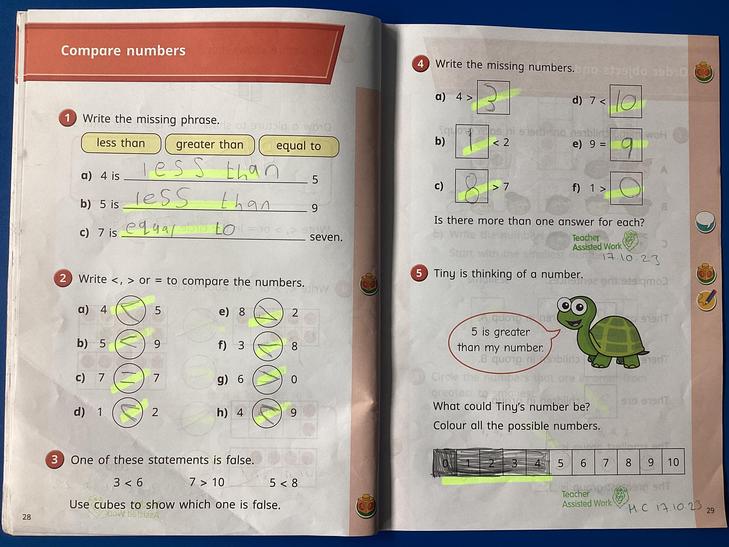
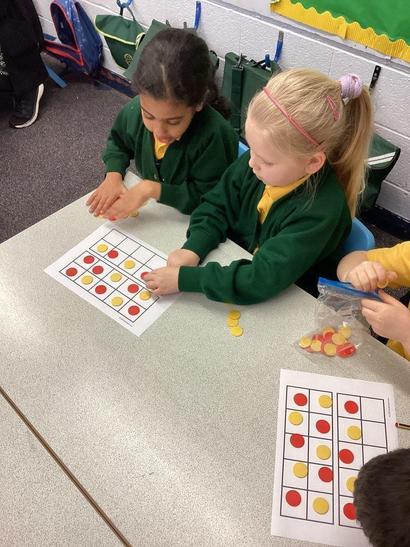
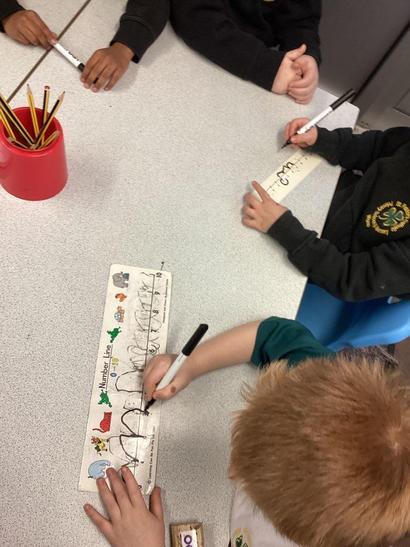
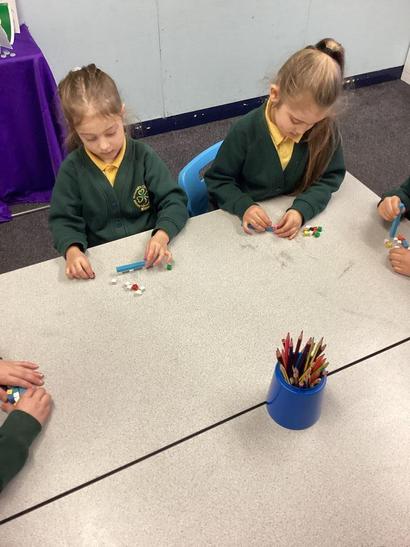
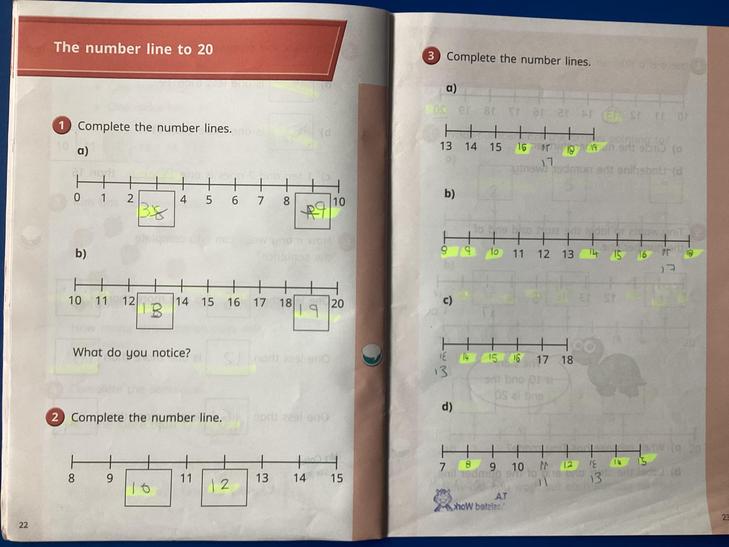
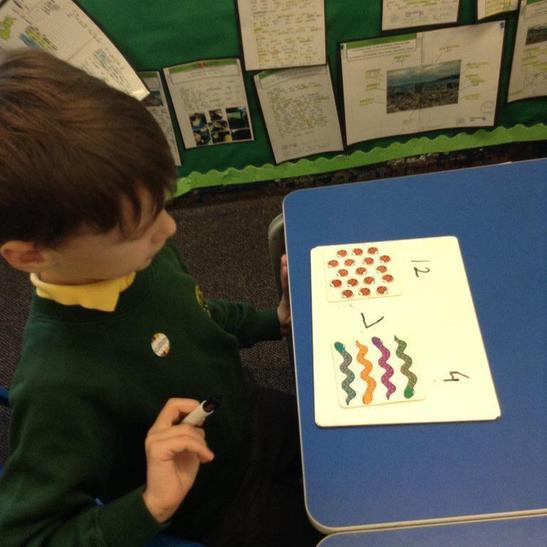
- Identify and represent numbers using objects and pictorial representations including the number line, and use the language of: equal to, more than, less than (fewer), most, least.
- Read and write numbers from 1 to 20 in numerals and words.
Year 2
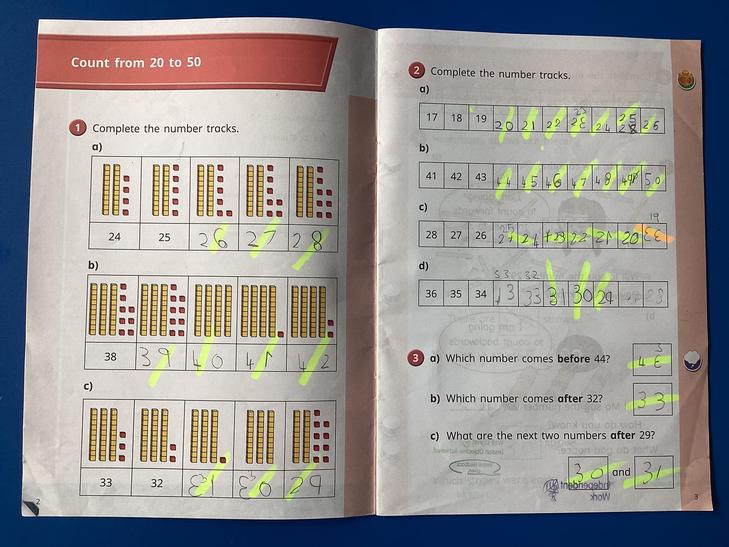
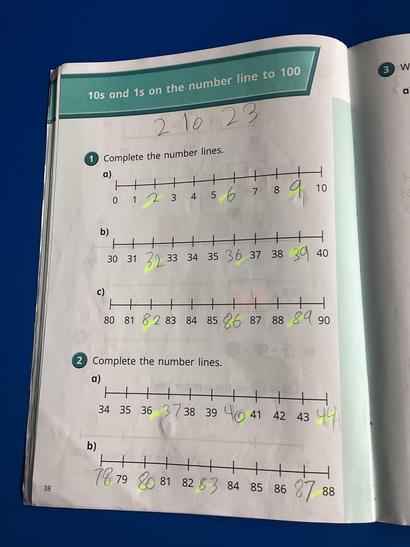
- Count in steps of 2, 3, and 5 from 0, and in tens from any number, forward and backward.
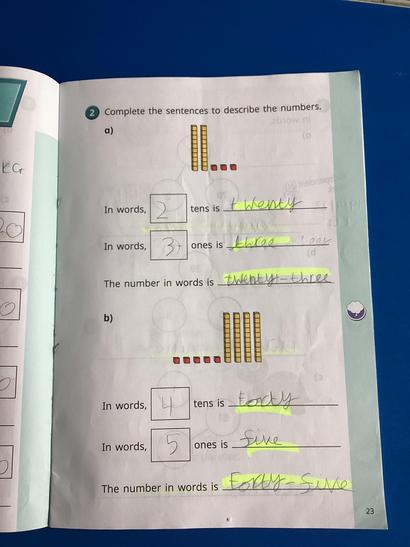
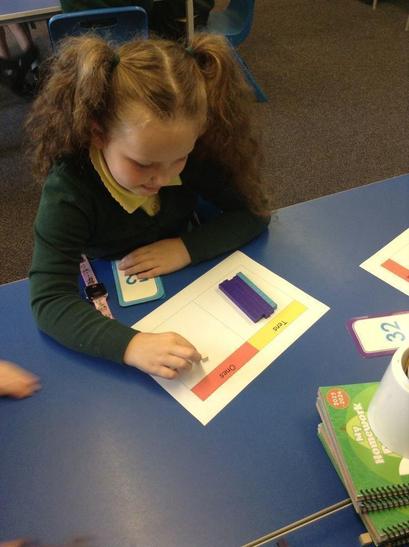
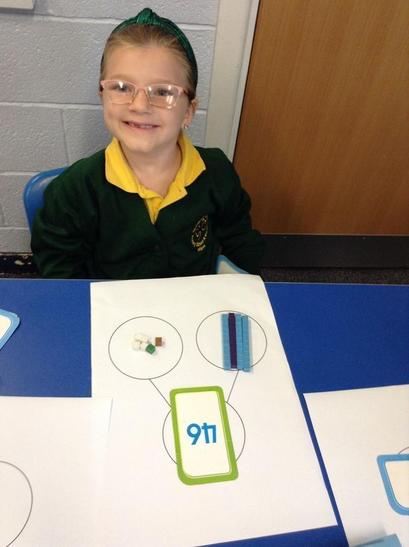
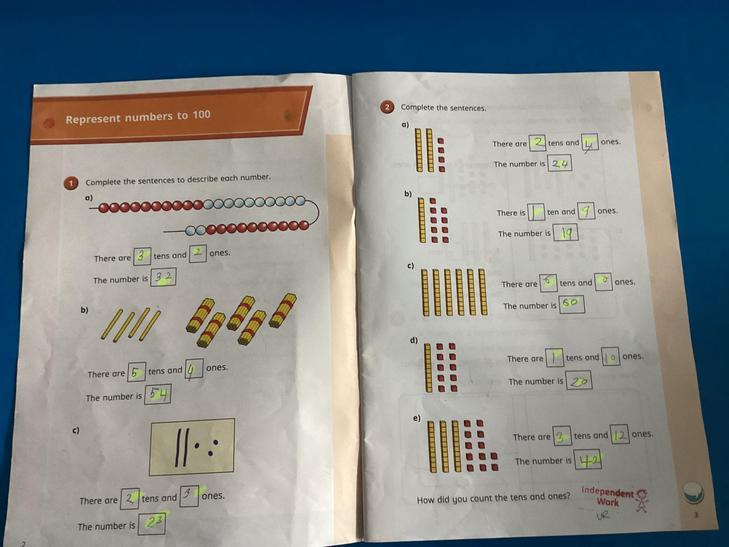
- Recognise the place value of each digit in a two-digit number (tens, ones).
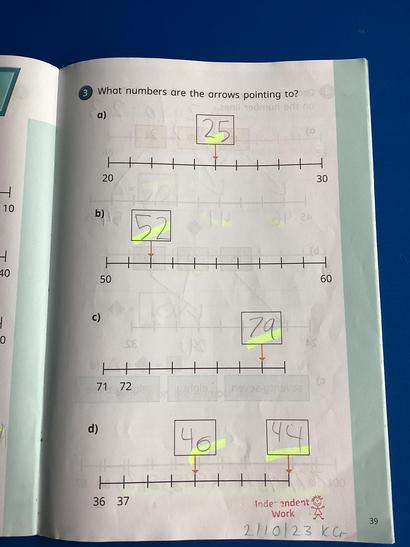
- Identify, represent and estimate numbers using different representations, including the number line.
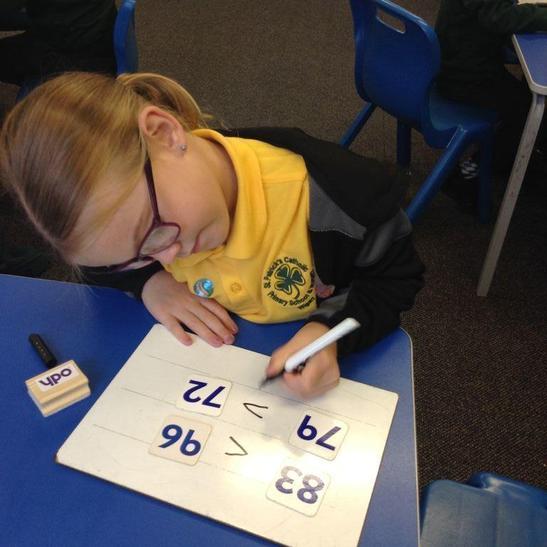
- Compare and order numbers from 0 up to 100; use and = signs.
- Read and write numbers to at least 100 in numerals and in words.
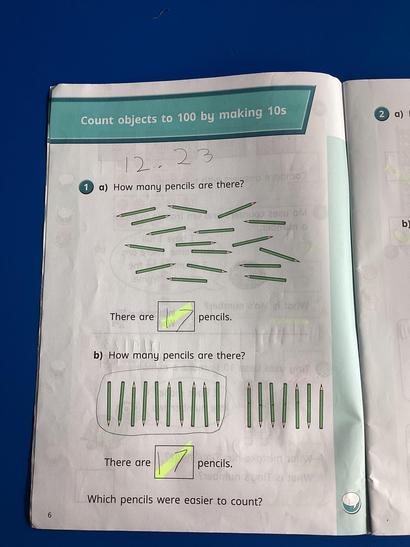
- Use place value and number facts to solve problems.
Year 3
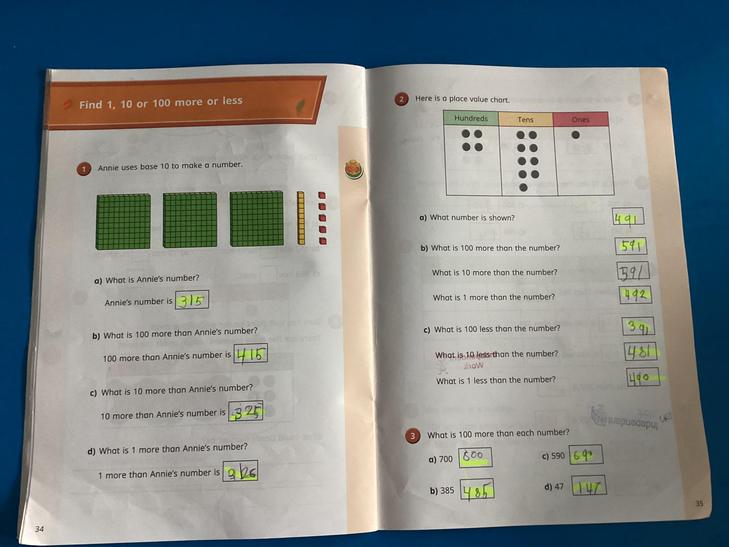
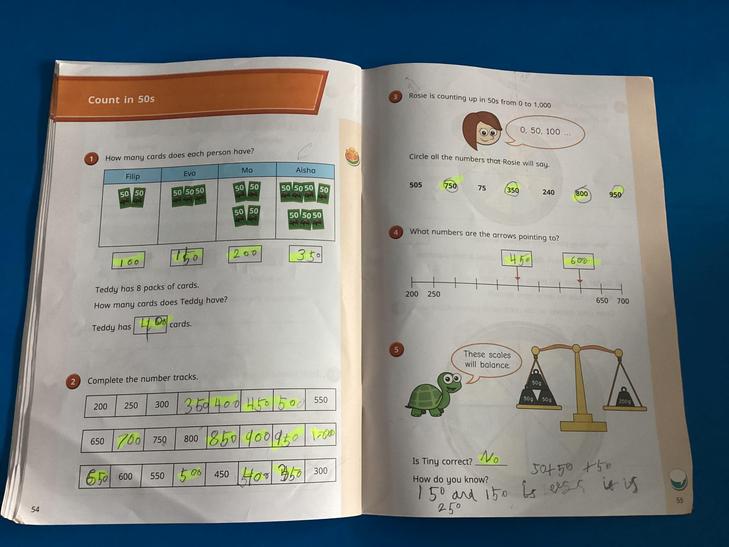
- Count from 0 in multiples of 4, 8, 50 and 100; find 10 or 100 more or less than a given number.
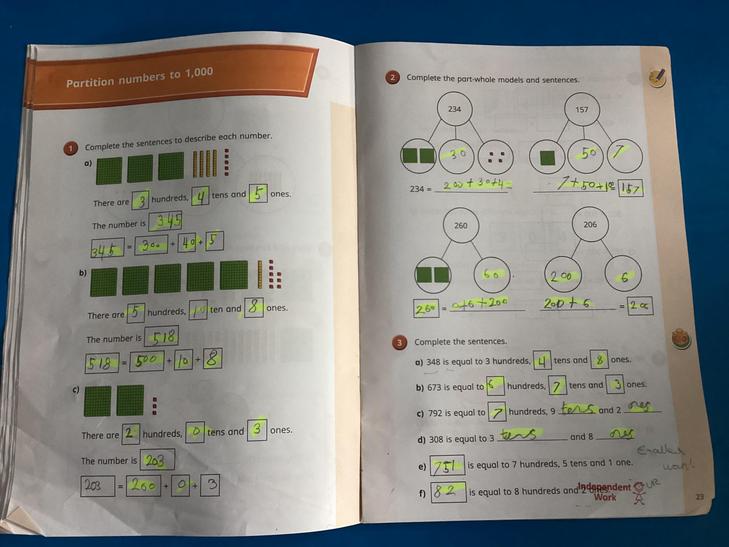
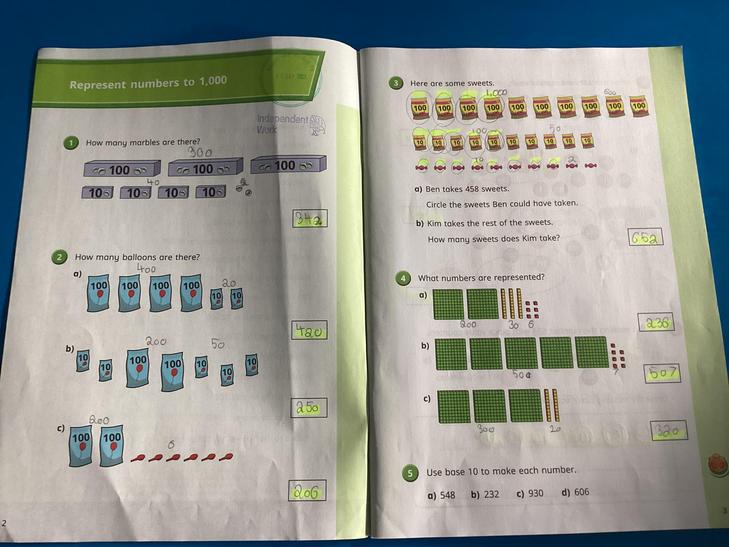
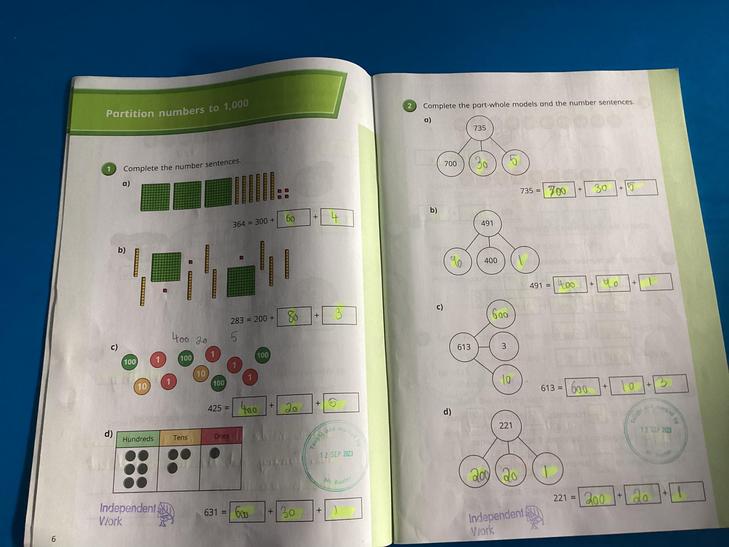
- Recognise the place value of each digit in a three-digit number (hundreds, tens, ones).
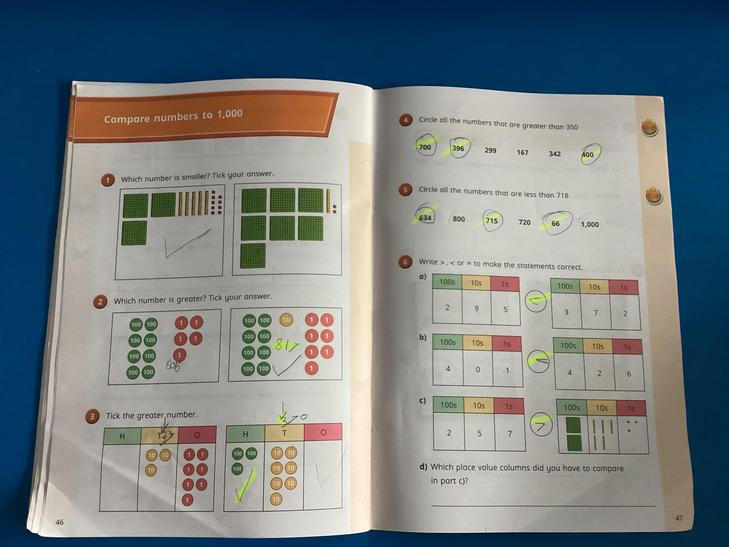
- Compare and order numbers up to 1000.
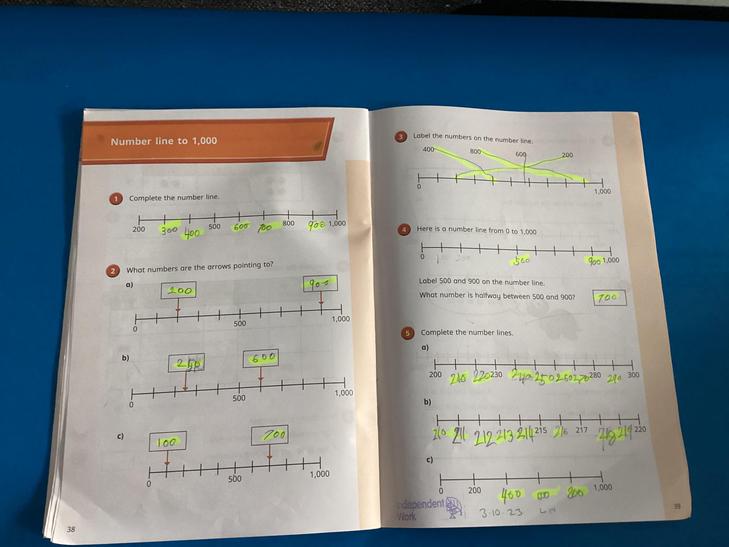
- Identify, represent and estimate numbers using different representations.
- Read and write numbers up to 1000 in numerals and in words.
- Solve number problems and practical problems involving these ideas.
Year 4
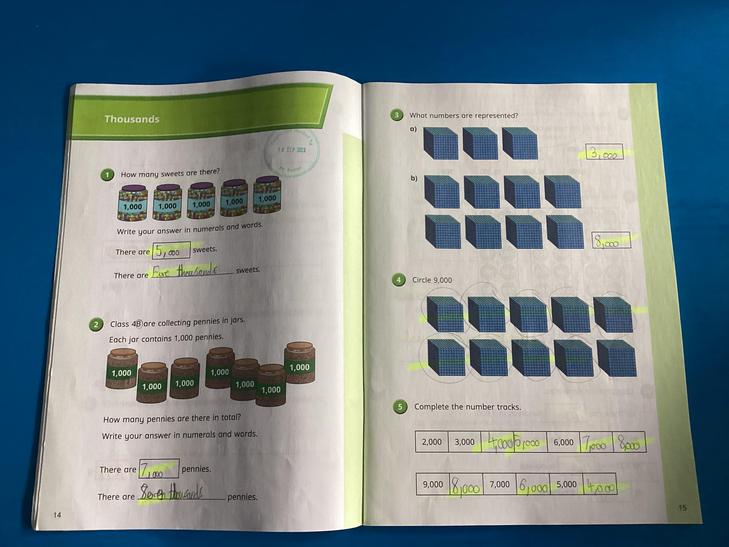
- Count in multiples of 6, 7, 9, 25 and 1000.
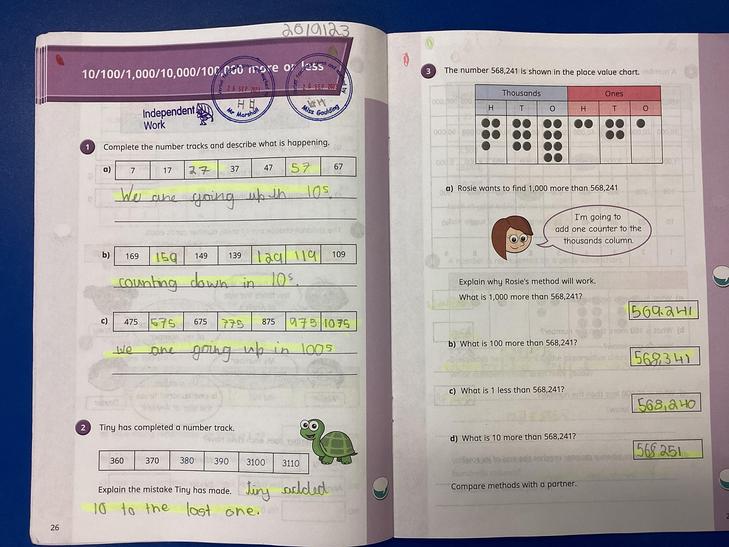
- Find 1000 more or less than a given number.
- Count backwards through zero to include negative numbers.
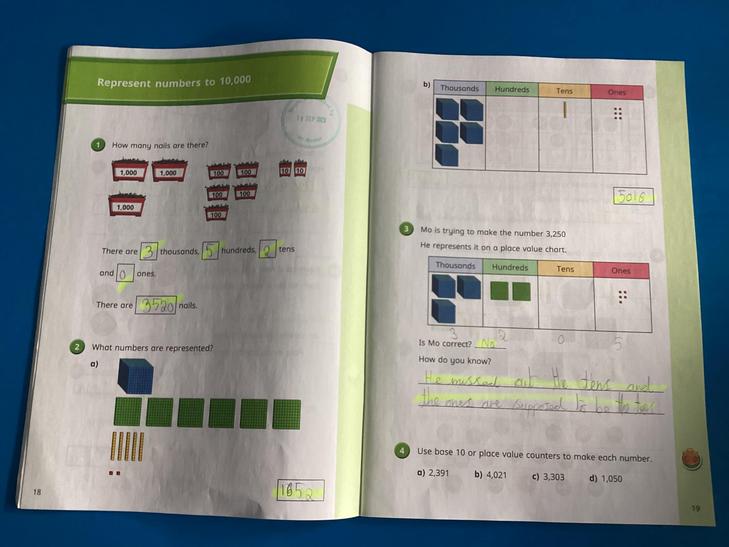
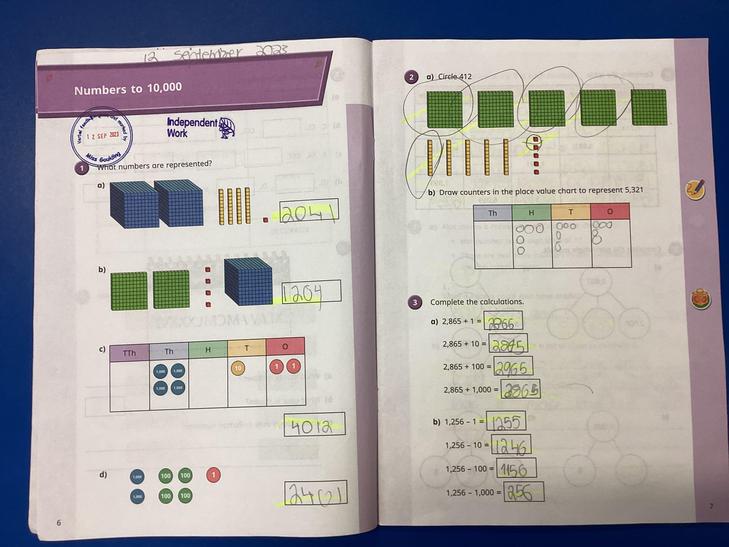
- Recognise the place value of each digit in a four-digit number (thousands, hundreds, tens, and ones).
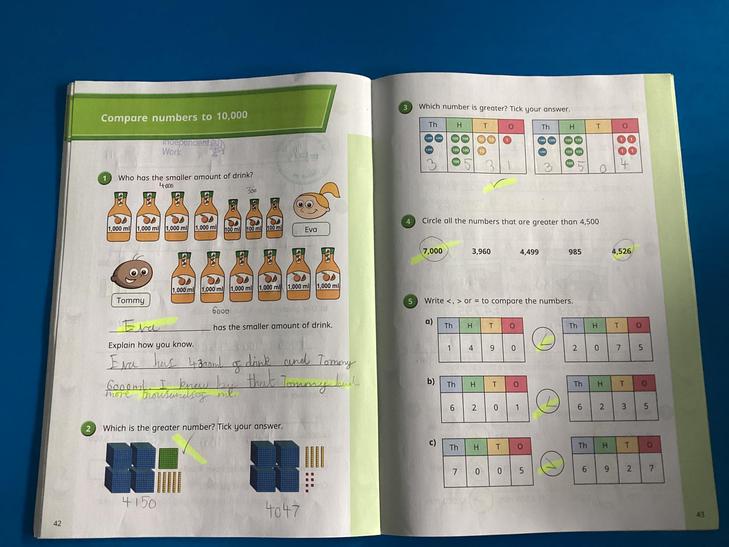
- Order and compare numbers beyond 1000.
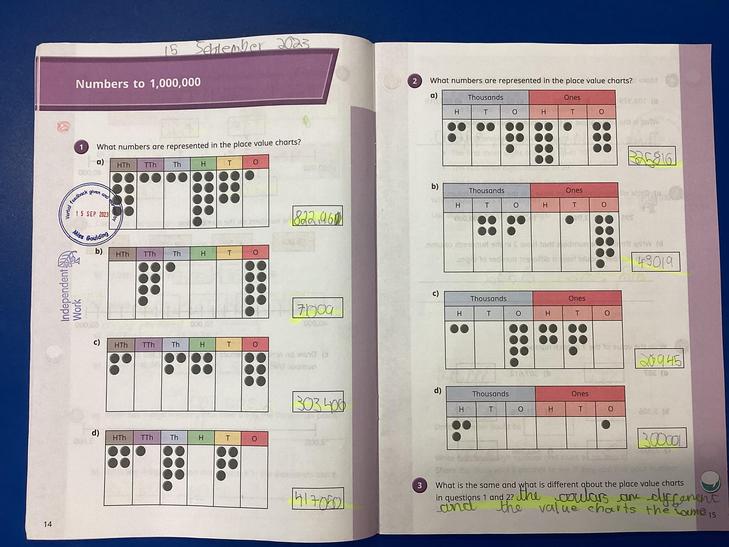
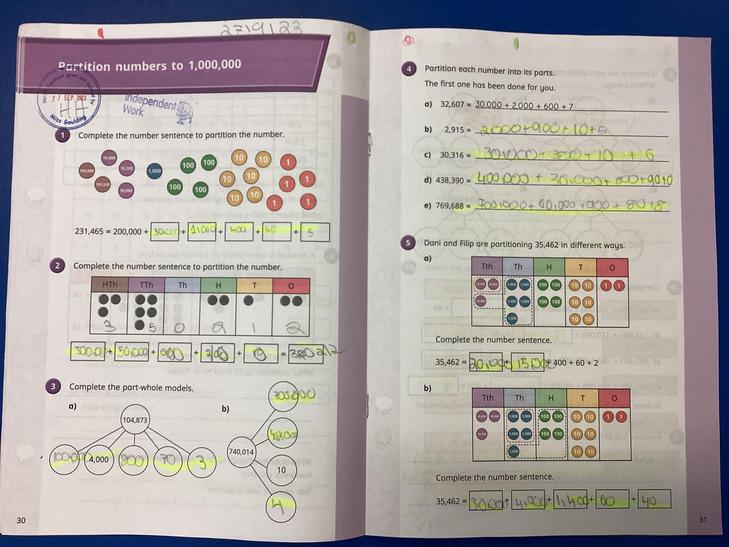
- Identify, represent and estimate numbers using different representations.
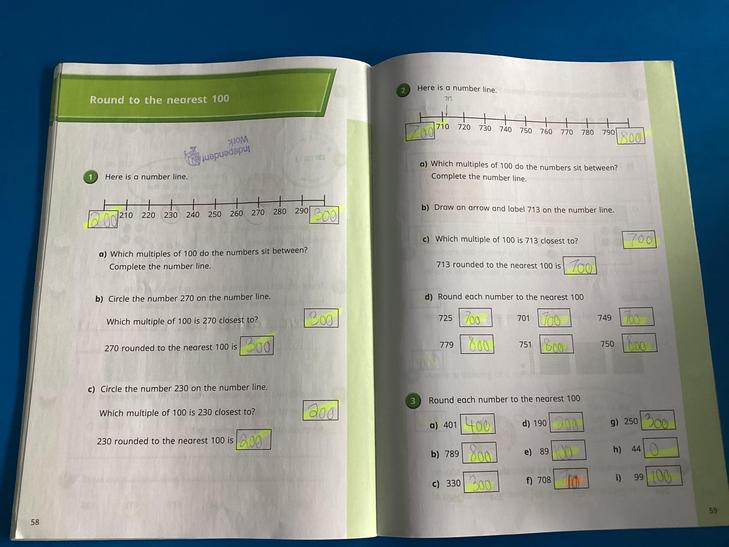
- Round any number to the nearest 10, 100 or 1000.
- Solve number and practical problems that involve all of the above and with increasingly large positive numbers.
- Read Roman numerals to 100 (I to C) and know that over time, the numeral system changed to include the concept of zero and place value.
Year 5
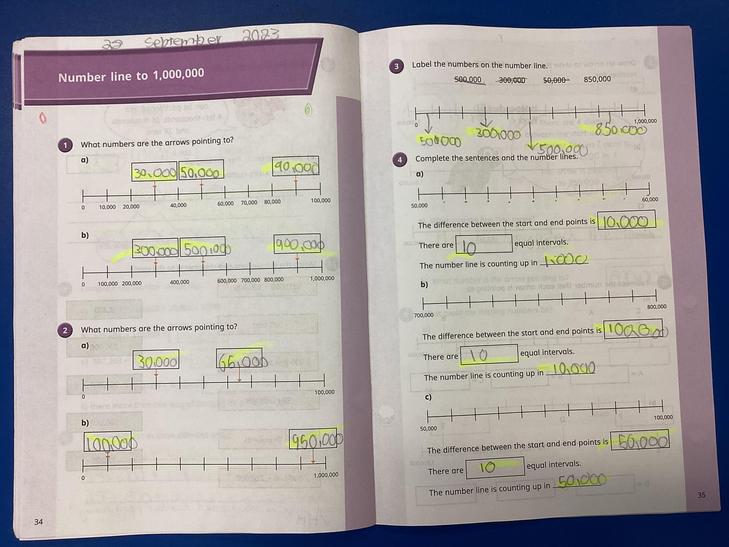
- Read, write, order and compare numbers to at least 1 000 000 and determine the value of each digit.
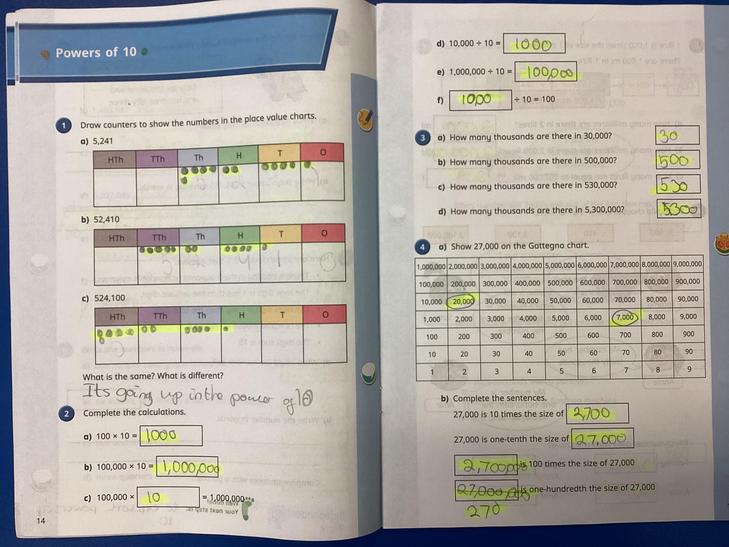
- Count forwards or backwards in steps of powers of 10 for any given number up to 1 000 000.
- Interpret negative numbers in context, count forwards and backwards with positive and negative whole numbers, including through zero.
- Round any number up to 1 000 000 to the nearest 10, 100, 1000, 10 000 and 100 000.
- Solve number problems and practical problems that involve all of the above.
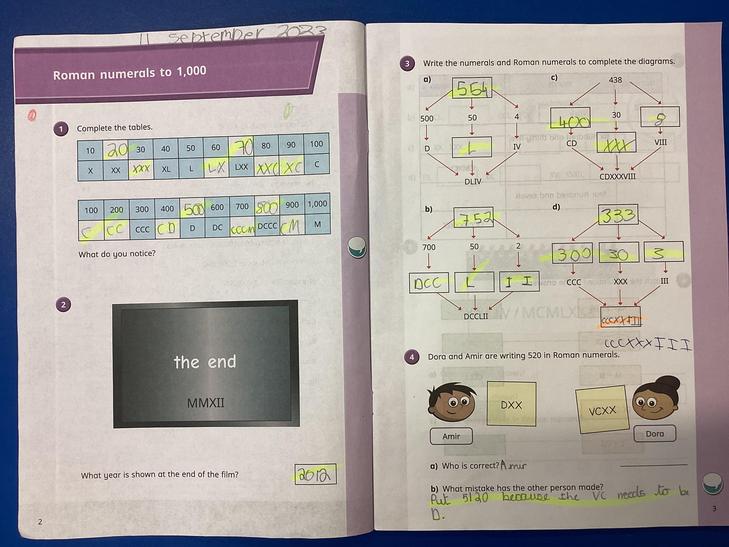
- Read Roman numerals to 1000 (M) and recognise years written in Roman numerals.
Year 6
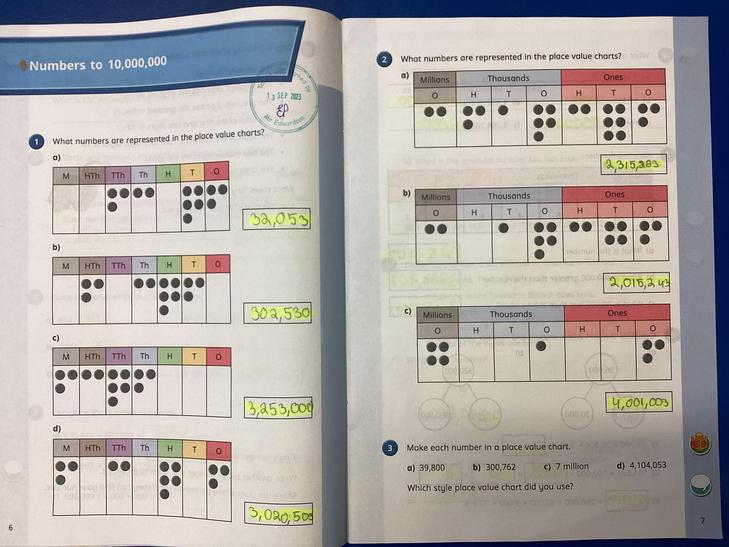
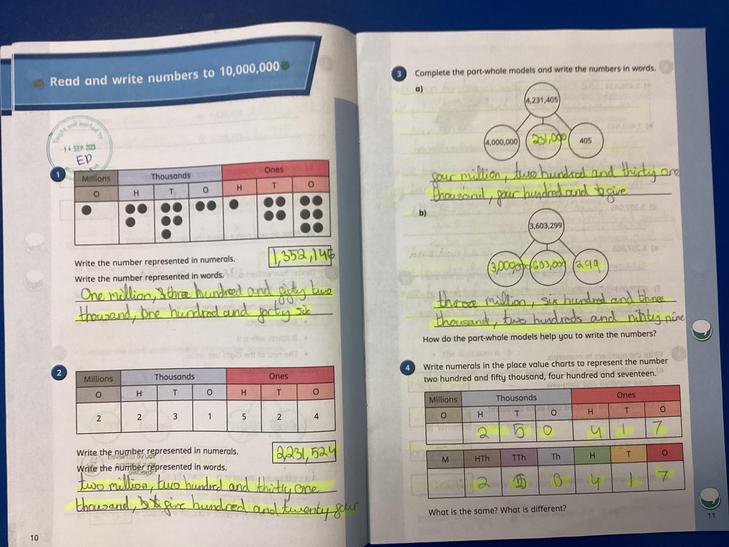
- Read, write, order and compare numbers up to 10 000 000 and determine the value of each digit.
- Round any whole number to a required degree of accuracy.
- Use negative numbers in context, and calculate intervals across zero.
- Solve number and practical problems that involve all of the above.