St Patrick's Catholic Primary School
Multiplication and Division
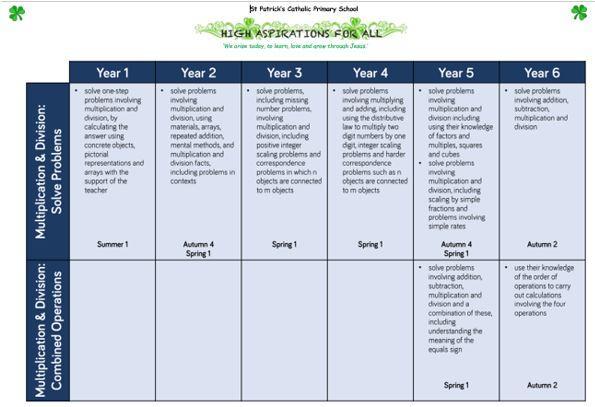
Year 1
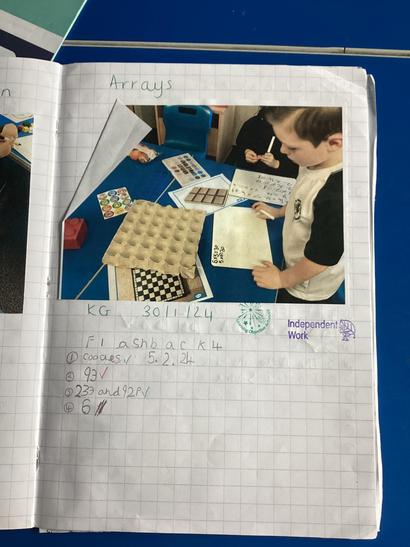
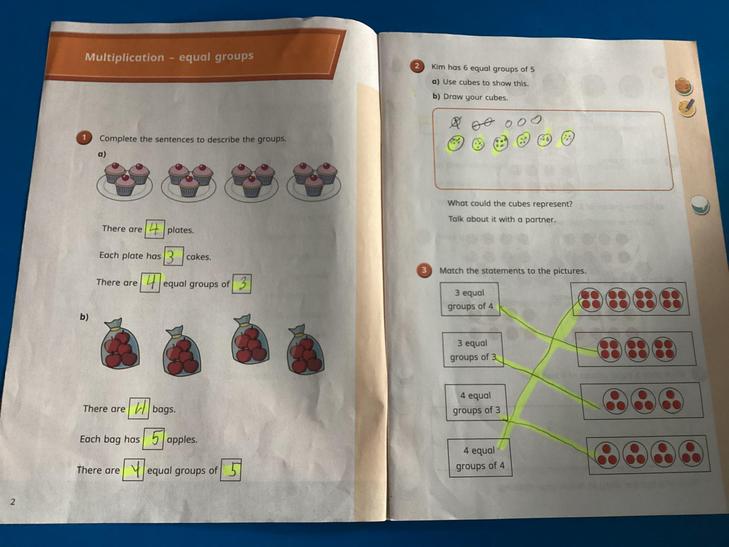
- Solve one-step problems involving multiplication and division, by calculating the answer using concrete objects, pictorial representations and arrays with the support of the teacher.
Year 2
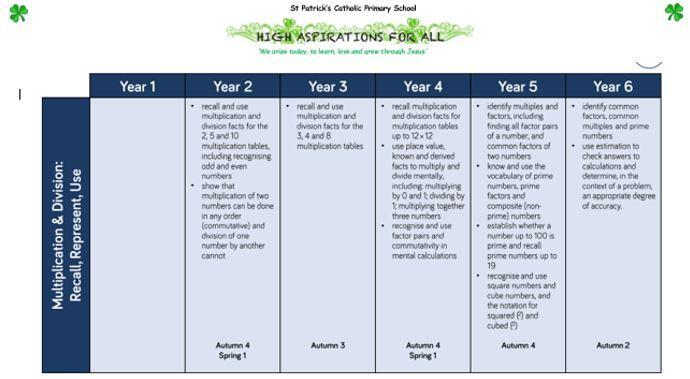
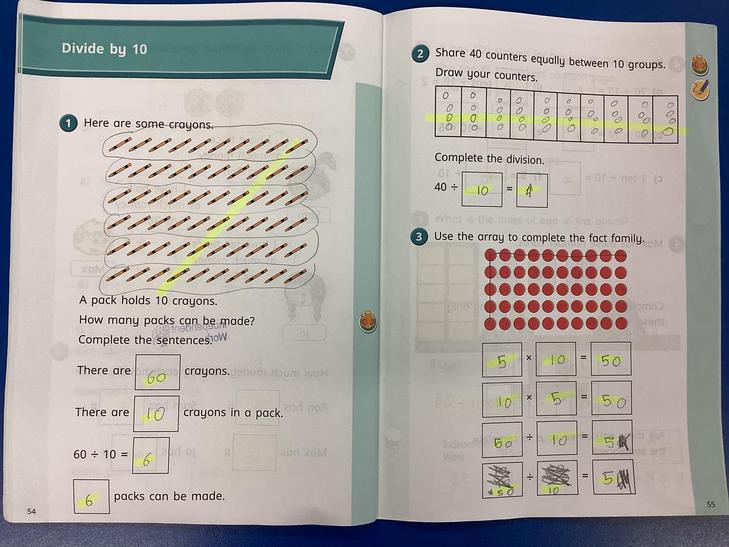
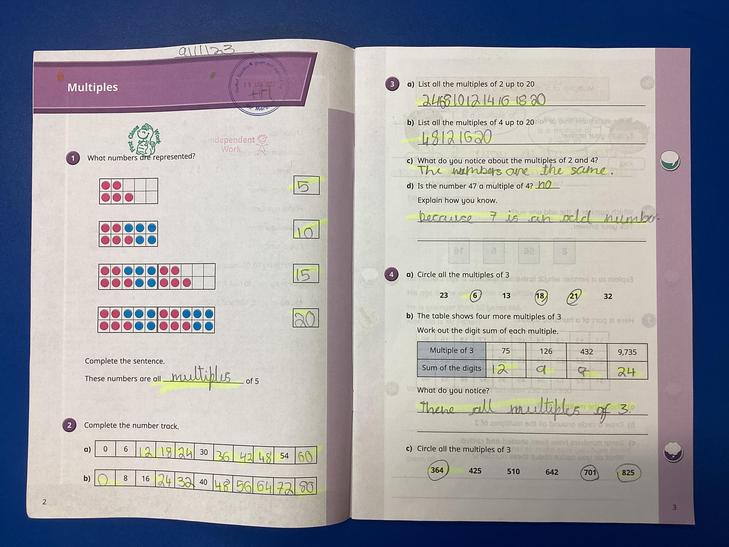
- Recall and use multiplication and division facts for the 2, 5 and 10 multiplication tables, including recognising odd and even numbers.
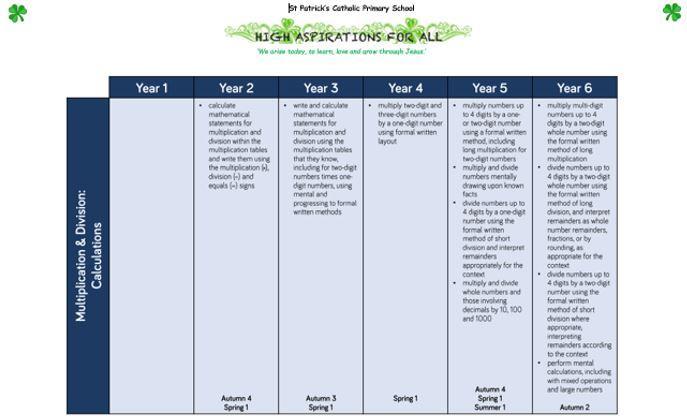
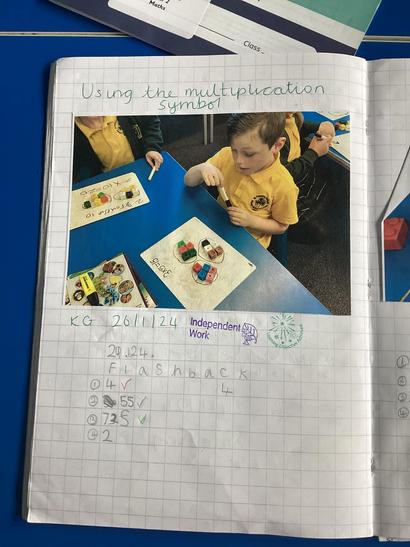
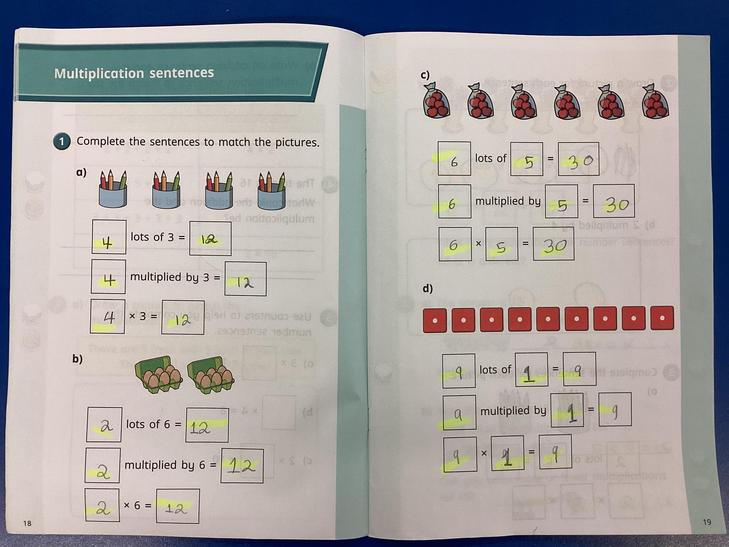
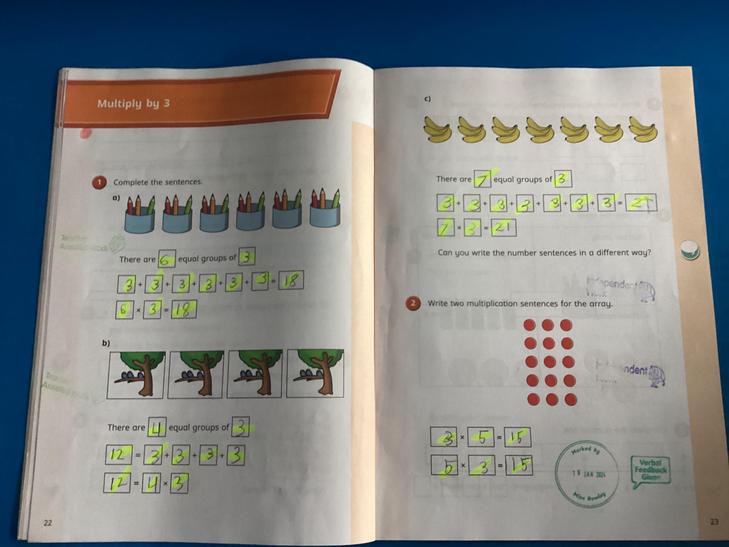
- Calculate mathematical statements for multiplication and division within the multiplication tables and write them using the multiplication (×), division (÷) and equals (=) signs.
- Show that multiplication of two numbers can be done in any order (commutative) and division of one number by another cannot.
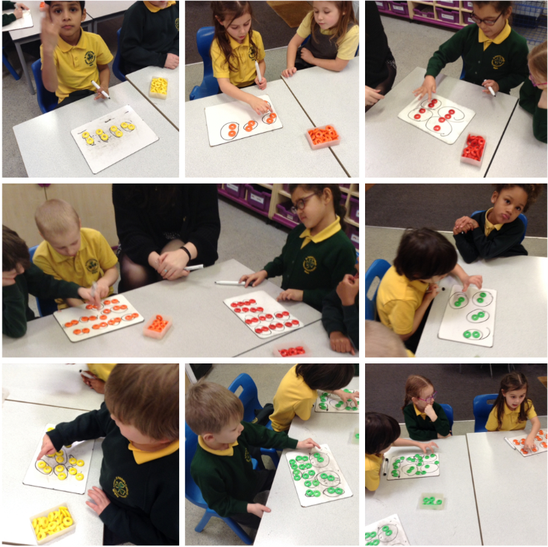
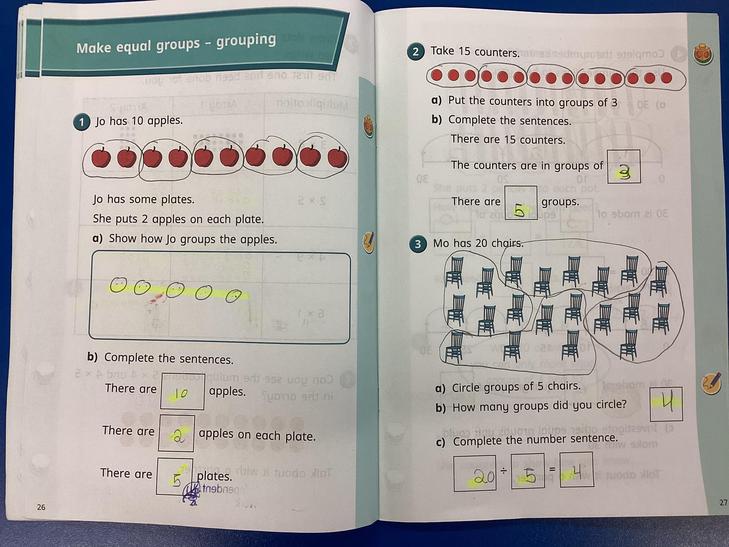
- Solve problems involving multiplication and division, using materials, arrays, repeated addition, mental methods, and multiplication and division facts, including problems in contexts.
Year 3
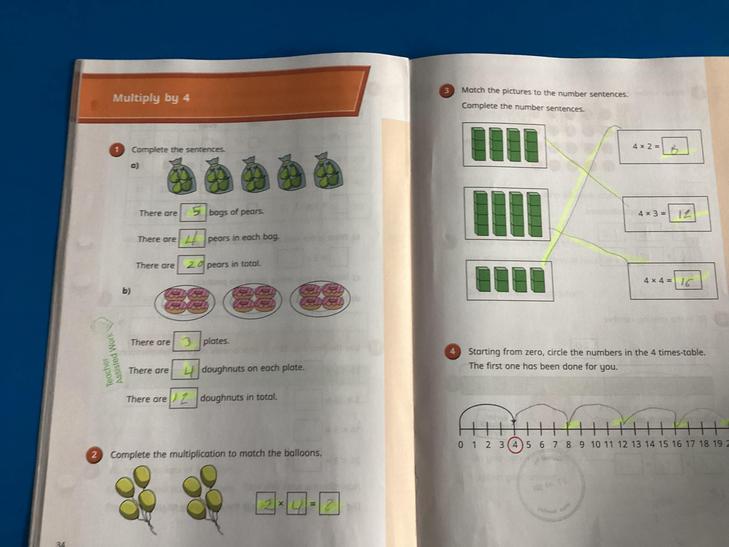
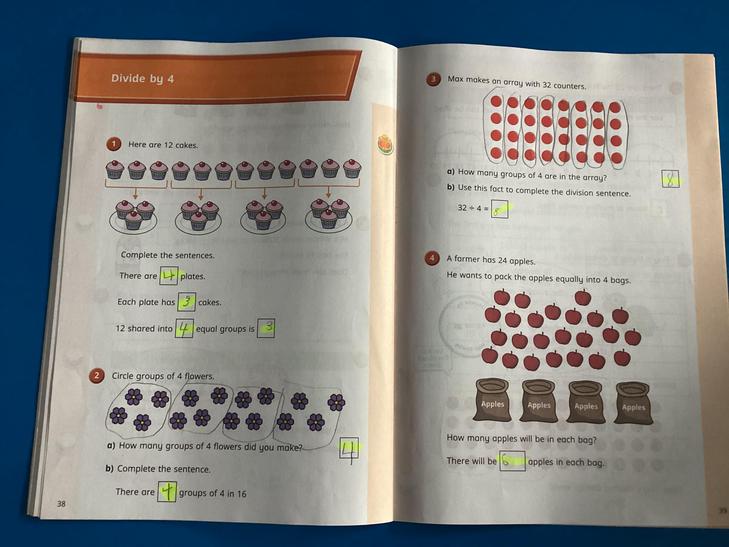
- Recall and use multiplication and division facts for the 3, 4 and 8 multiplication tables.
- Write and calculate mathematical statements for multiplication and division using the multiplication tables that they know, including for two-digit numbers times one-digit numbers, using mental and progressing to formal written methods.
- Solve problems, including missing number problems, involving multiplication and division, including positive integer scaling problems and correspondence problems in which n objects are connected to m objects.
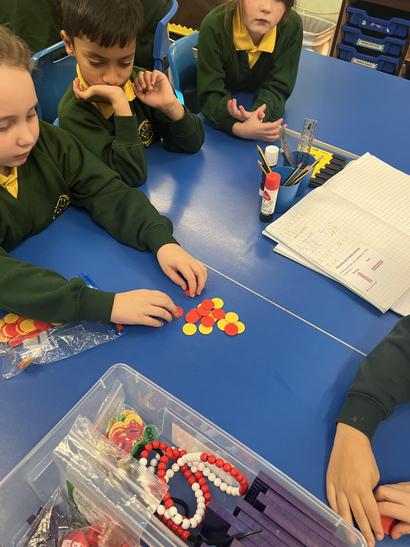
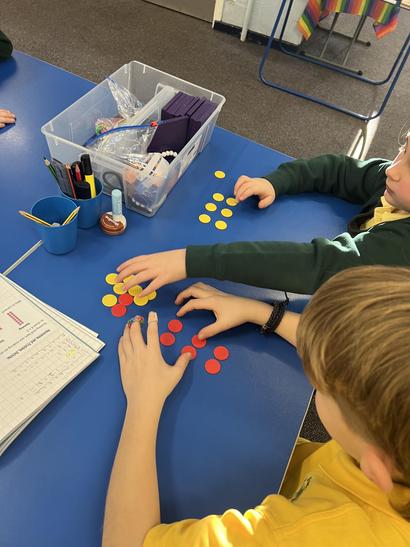
Year 4
- Recall multiplication and division facts for multiplication tables up to 12 × 12.
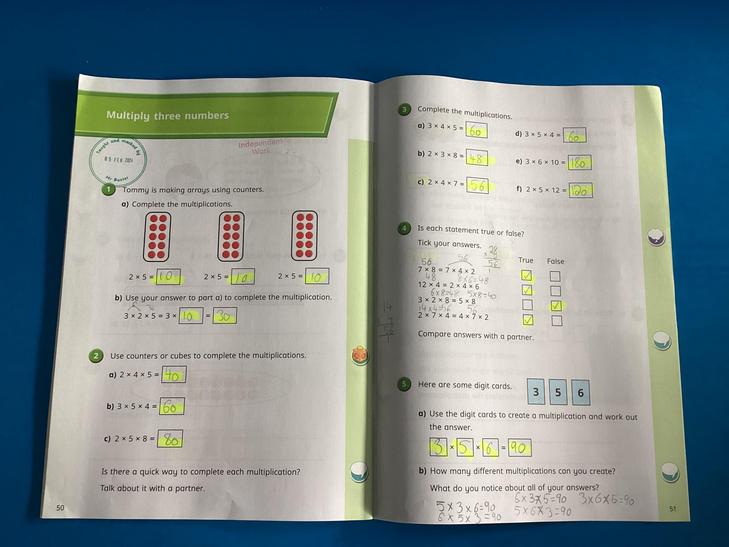
- Use place value, known and derived facts to multiply and divide mentally, including: multiplying by 0 and 1; dividing by 1; multiplying together three numbers.
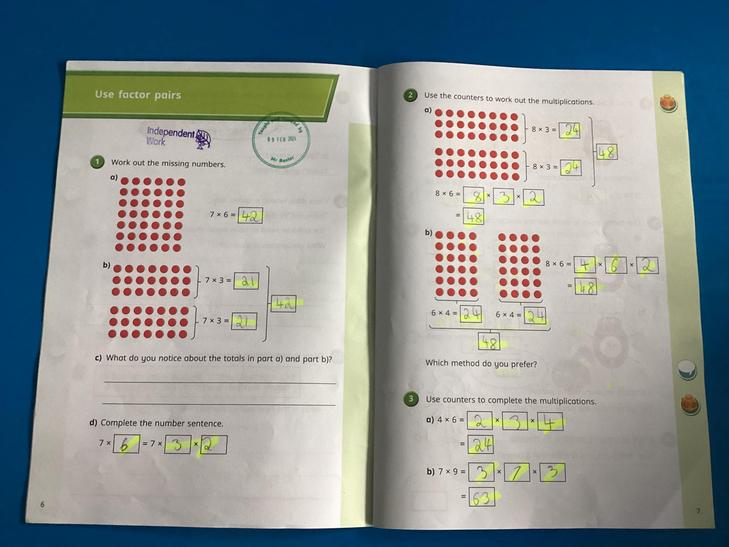
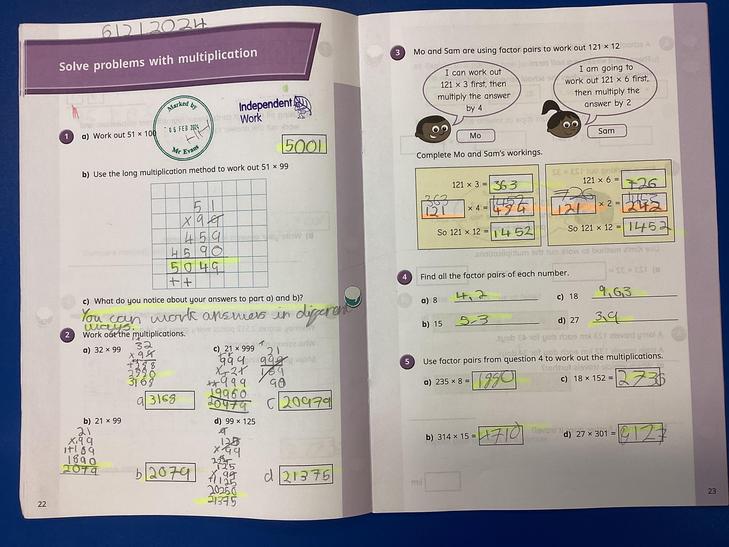
- Recognise and use factor pairs and commutativity in mental calculations.
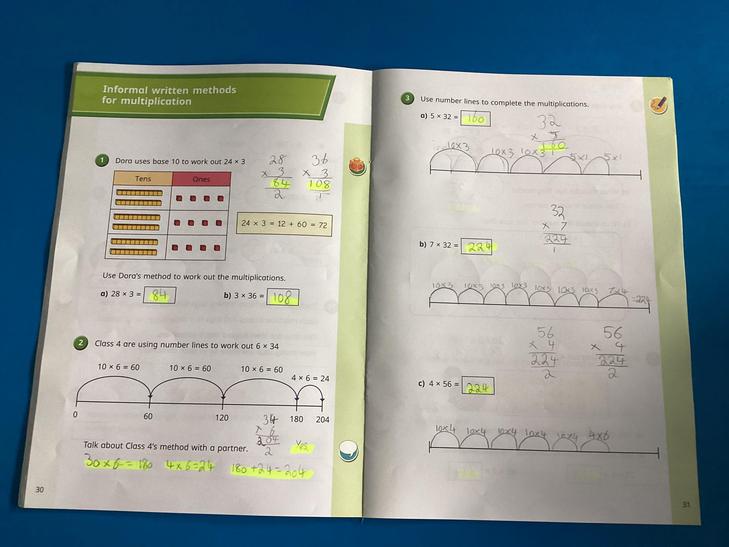
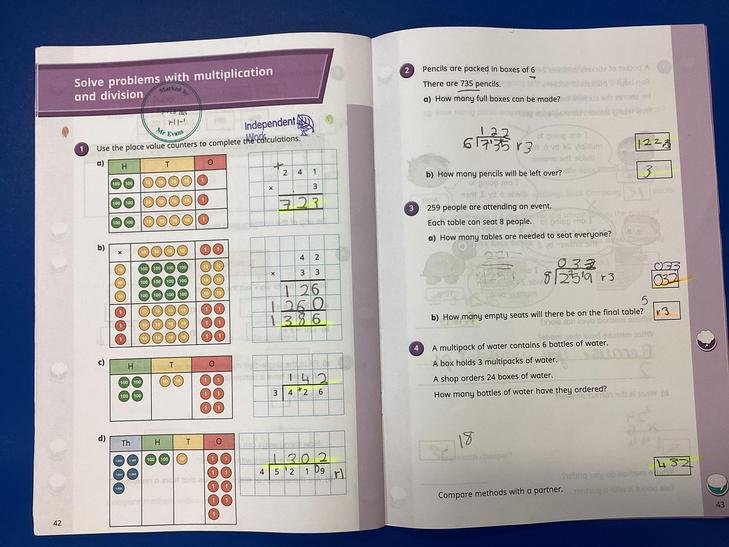
- Multiply two-digit and three-digit numbers by a one-digit number using formal written layout.
- Solve problems involving multiplying and adding, including using the distributive law to multiply two digit numbers by one digit, integer scaling problems and harder correspondence problems such as n objects are connected to m objects
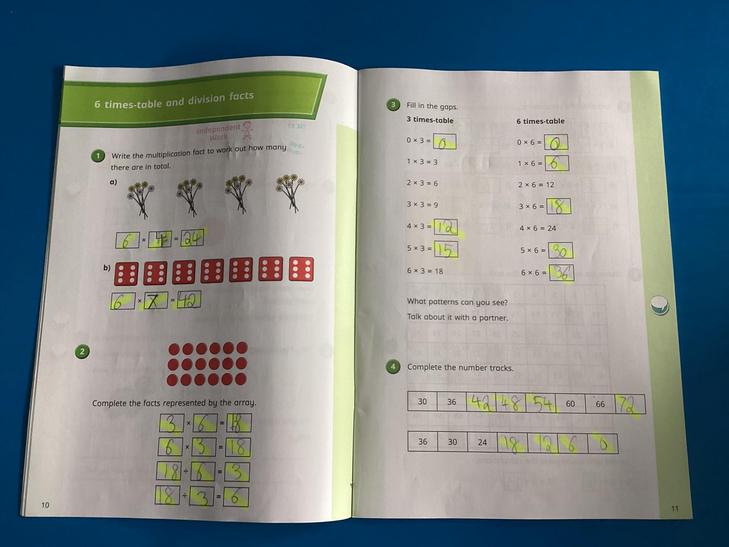
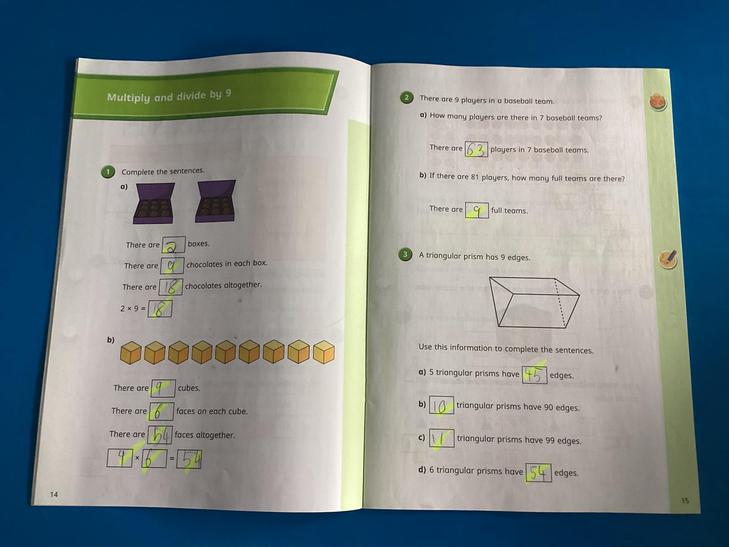
Year 5
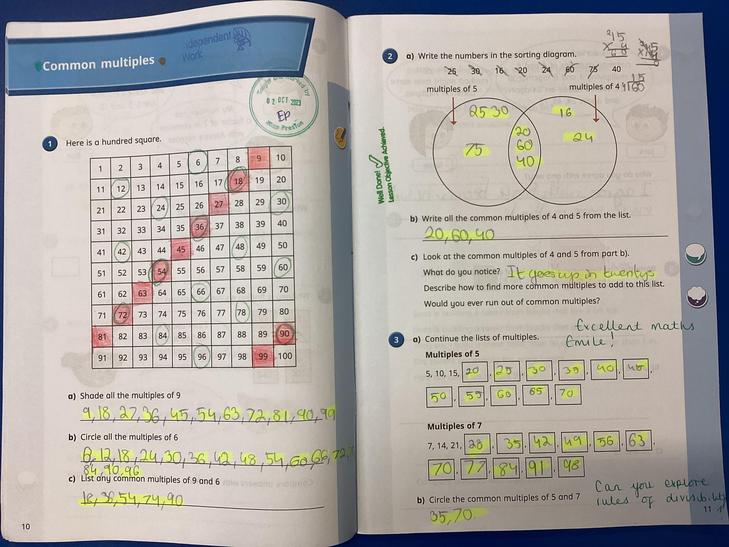
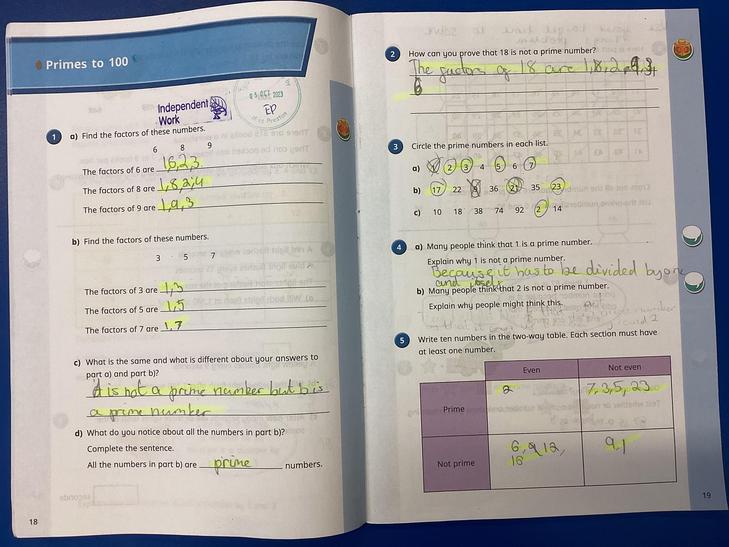
- Identify multiples and factors, including finding all factor pairs of a number, and common factors of two numbers.
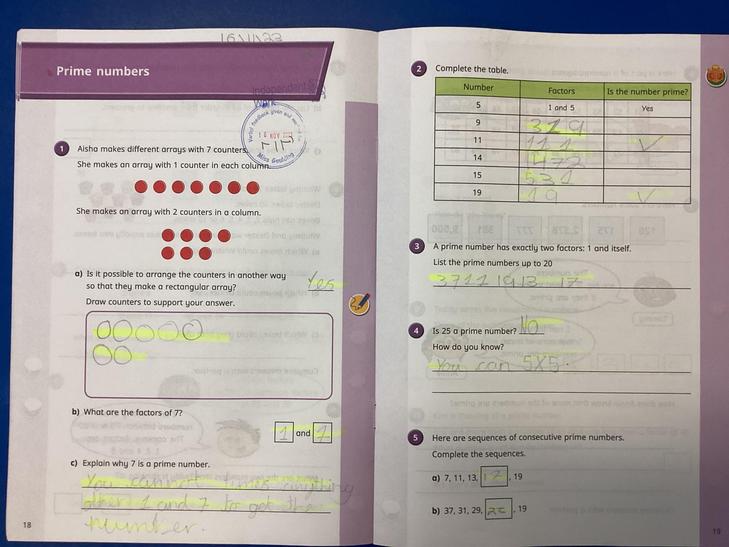
- Know and use the vocabulary of prime numbers, prime factors and composite (nonprime) numbers.
- Establish whether a number up to 100 is prime and recall prime numbers up to 19.
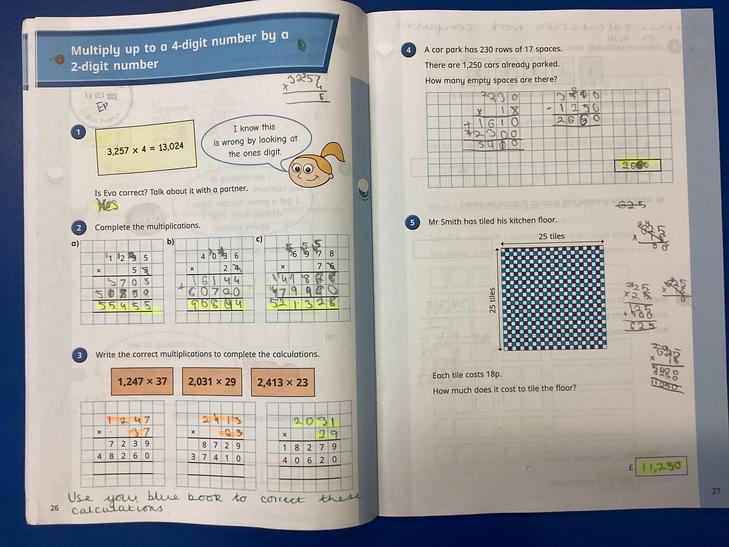
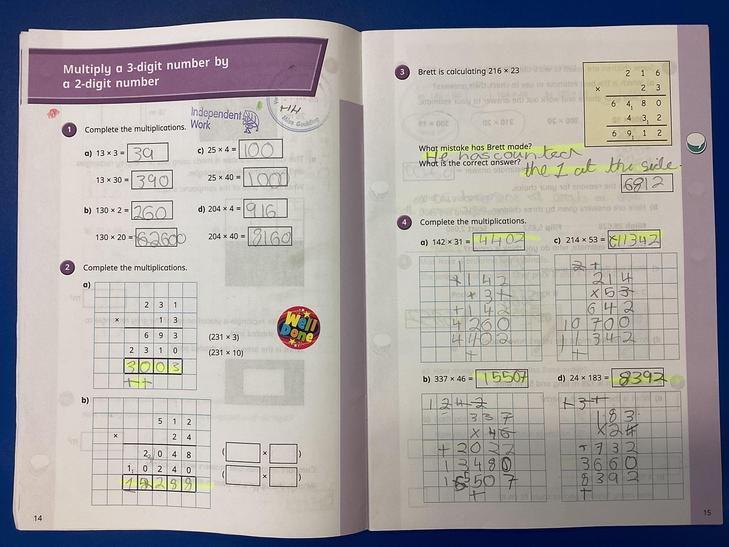
- Multiply numbers up to 4 digits by a one- or two-digit number using a formal written method, including long multiplication for two-digit numbers.
- Multiply and divide numbers mentally drawing upon known facts.
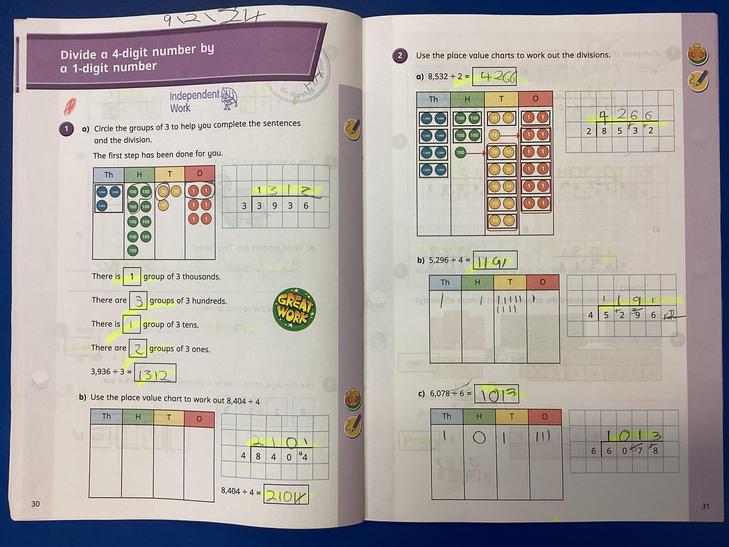
- Divide numbers up to 4 digits by a one-digit number using the formal written method of short division and interpret remainders appropriately for the context.
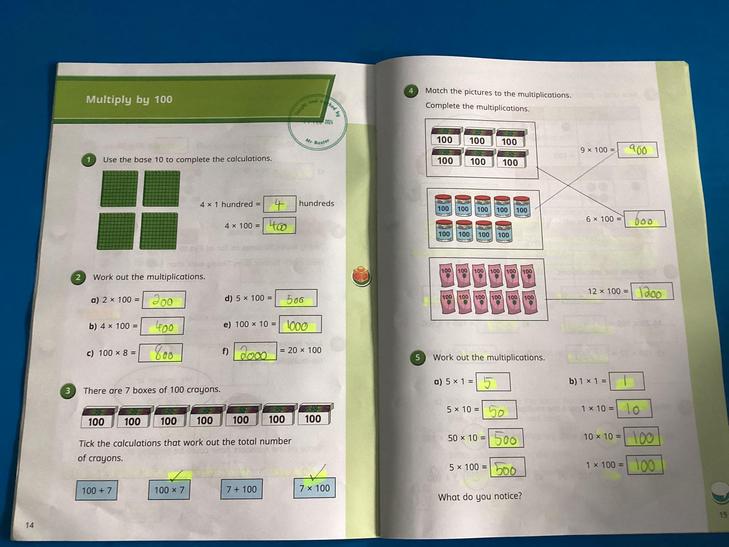
- Multiply and divide whole numbers and those involving decimals by 10, 100 and 1000
Year 6
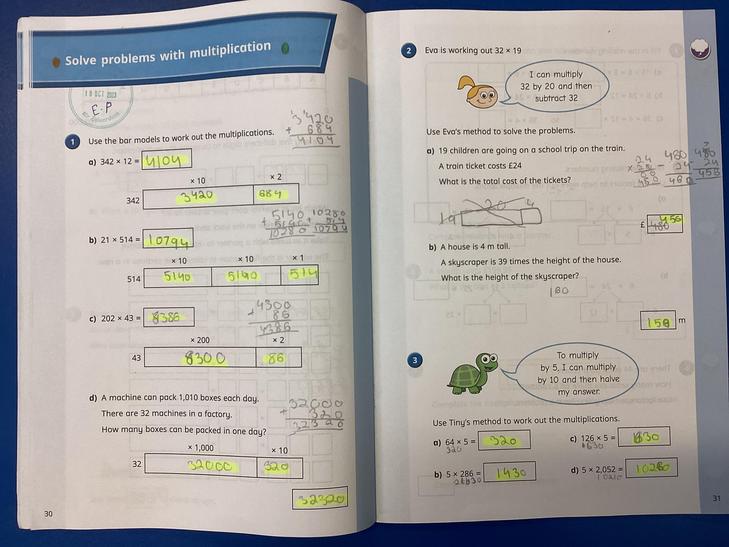
- Multiply multi-digit numbers up to 4 digits by a two-digit whole number using the formal written method of long multiplication.
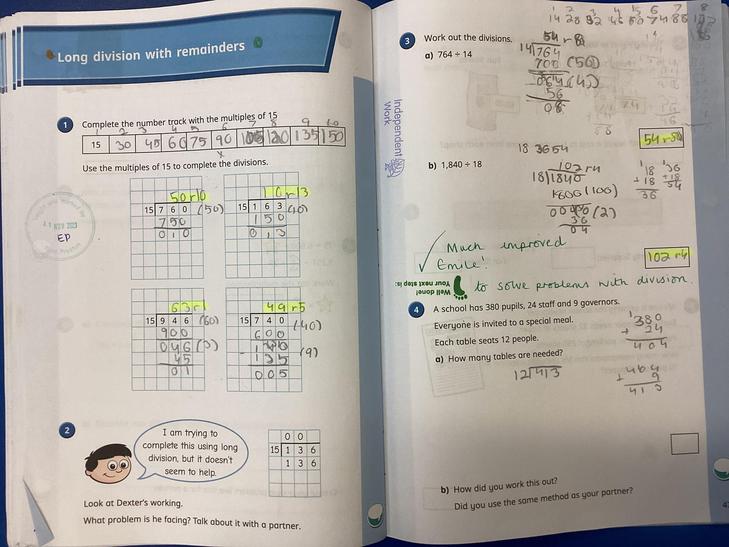
- Divide numbers up to 4 digits by a two-digit whole number using the formal written method of long division, and interpret remainders as whole number remainders, fractions, or by rounding, as appropriate for the context.
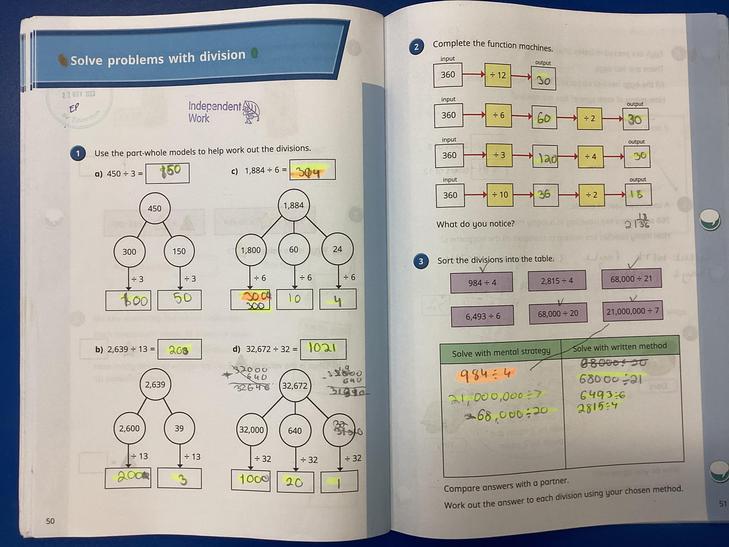
- Divide numbers up to 4 digits by a two-digit number using the formal written method of short division where appropriate, interpreting remainders according to the context.
- Perform mental calculations, including with mixed operations and large numbers.
- Use their knowledge of the order of operations to carry out calculations involving the four operations.
- Solve problems involving multiplication and division.
- Use estimation to check answers to calculations and determine, in the context of a problem, an appropriate degree of accuracy.