St Patrick's Catholic Primary School
Fractions
Year 1
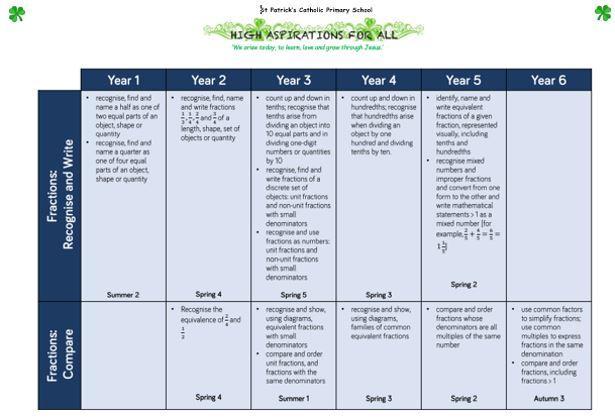
- Recognise, find and name a half as one of two equal parts of an object, shape or quantity.
- Recognise, find and name a quarter as one of four equal parts of an object, shape or quantity.
Year 2
- Recognise, find, name and write fractions 1/3 , 1/4 , 2/4 and 3/4 of a length, shape, set of objects or quantity.
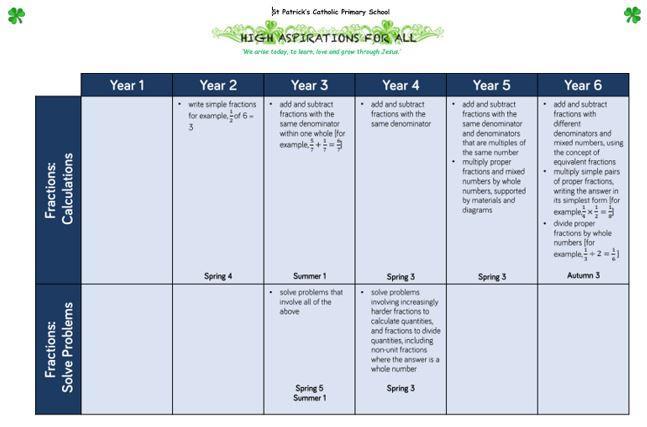
- Write simple fractions for example, 1/2 of 6 = 3 and recognise the equivalence of 2/4 and 1/2 .
Year 3
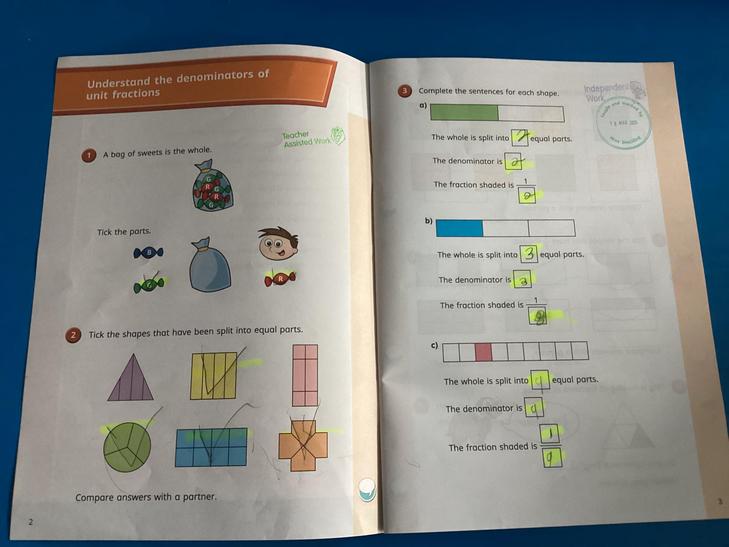
- Count up and down in tenths; recognise that tenths arise from dividing an object into 10 equal parts and in dividing one-digit numbers or quantities by 10.
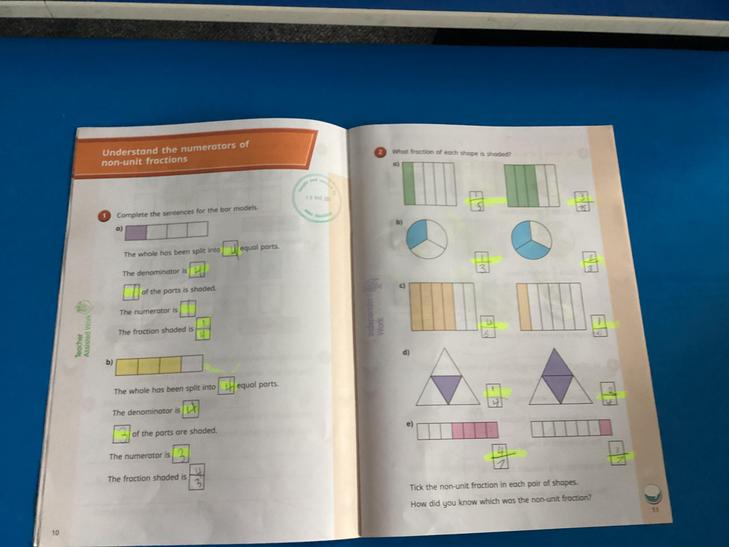
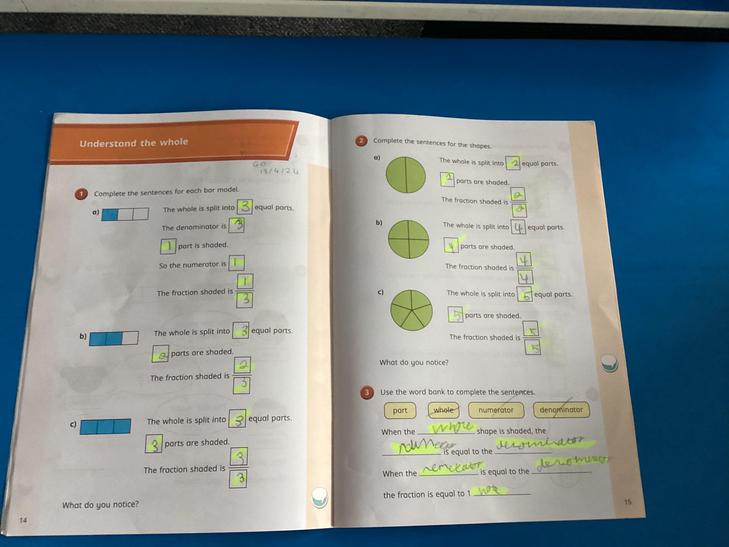
- Recognise, find and write fractions of a discrete set of objects: unit fractions and non - unit fractions with small denominators.
- Recognise and use fractions as numbers: unit fractions and non-unit fractions with small denominators.
- Recognise and show, using diagrams, equivalent fractions with small denominators.
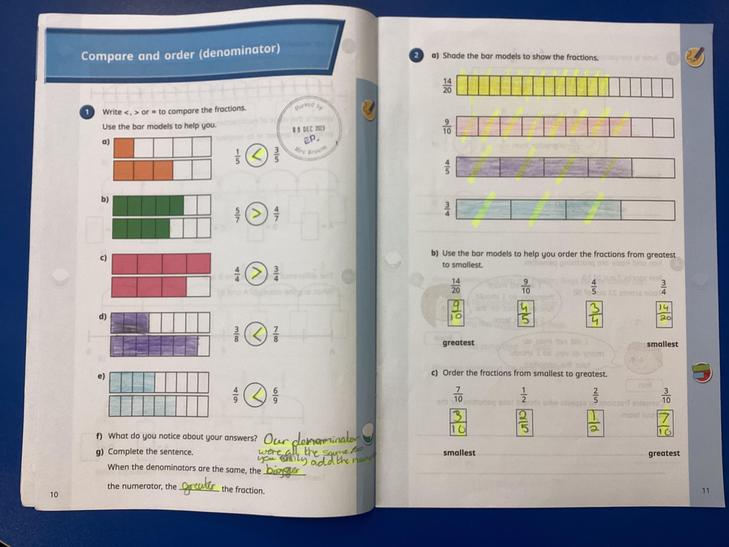
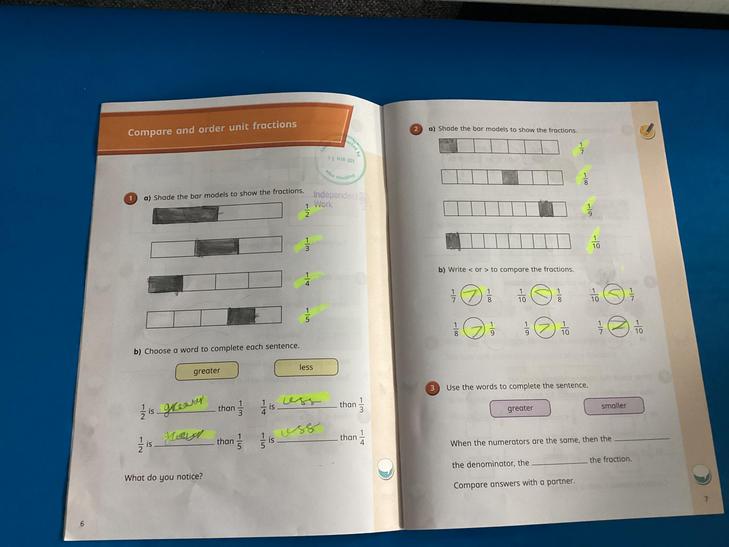
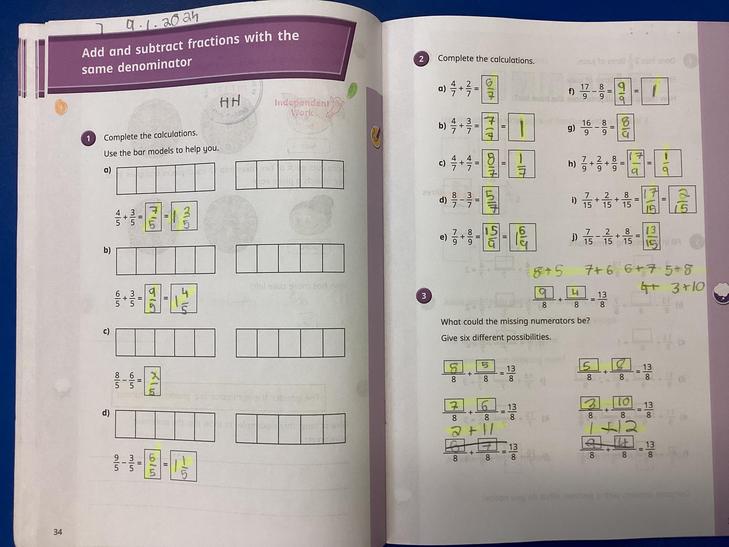
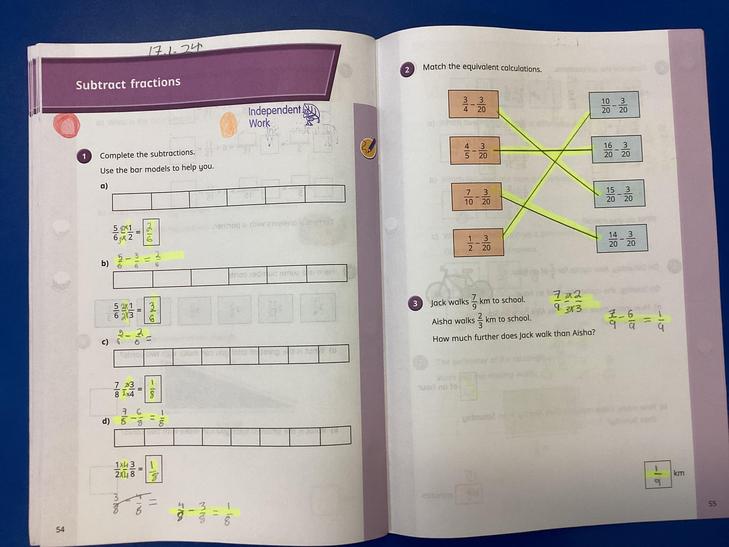
- Add and subtract fractions with the same denominator within one whole compare and order unit fractions, and fractions with the same denominators.
- Solve problems that involve all of the above.
Year 4
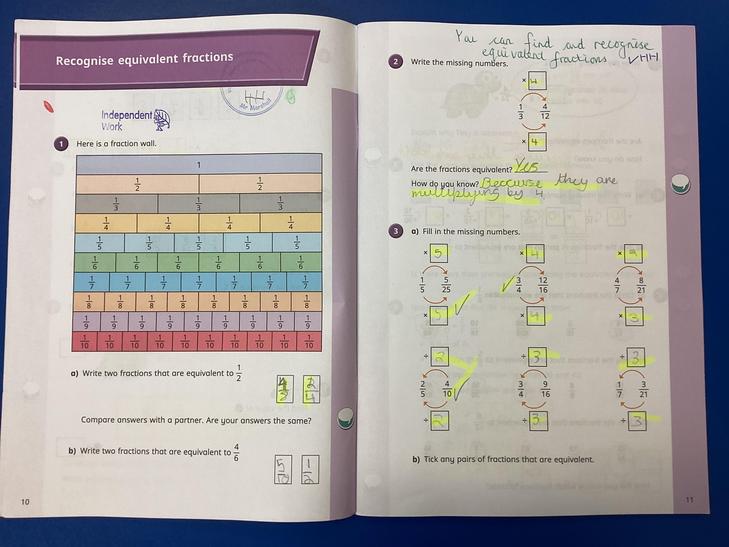
- Recognise and show, using diagrams, families of common equivalent fractions.
- Count up and down in hundredths; recognise that hundredths arise when dividing an object by one hundred and dividing tenths by ten.
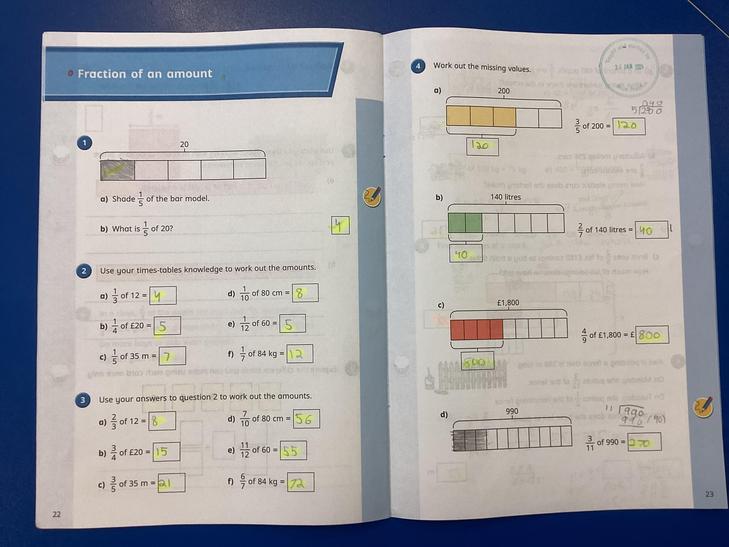
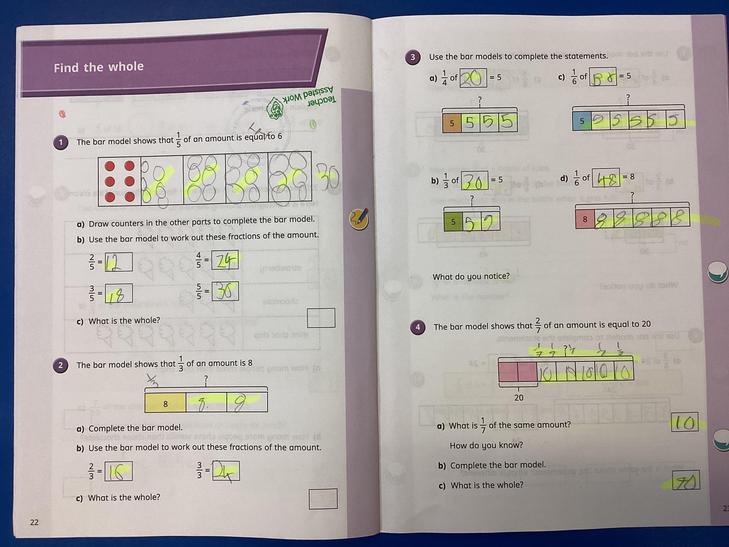
- Solve problems involving increasingly harder fractions to calculate quantities, and fractions to divide quantities, including non-unit fractions where the answer is a whole number.
- Add and subtract fractions with the same denominator.
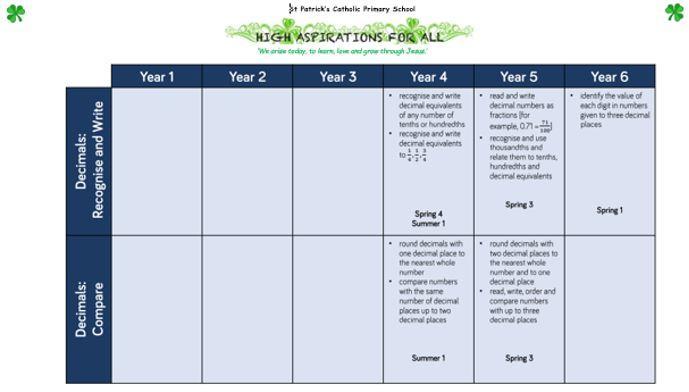
- Recognise and write decimal equivalents of any number of tenths or hundredths.
- Recognise and write decimal equivalents to 1/4 , 1/2 , ¾.
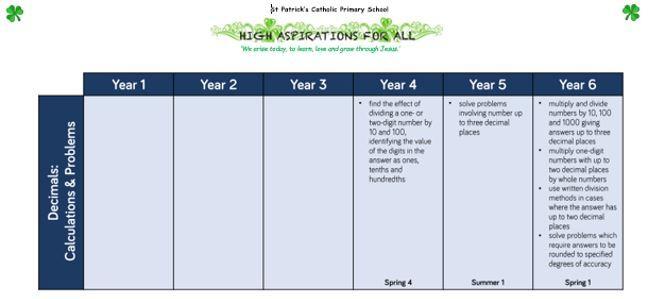
- Find the effect of dividing a one- or two-digit number by 10 and 100, identifying the value of the digits in the answer as ones, tenths and hundredths.
- Round decimals with one decimal place to the nearest whole number.
- Compare numbers with the same number of decimal places up to two decimal places.
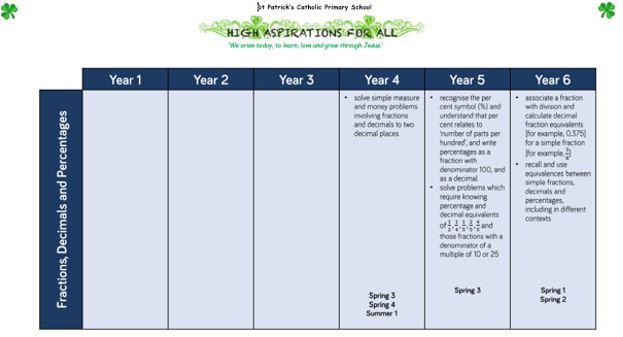
- Solve simple measure and money problems involving fractions and decimals to two decimal places.
Year 5
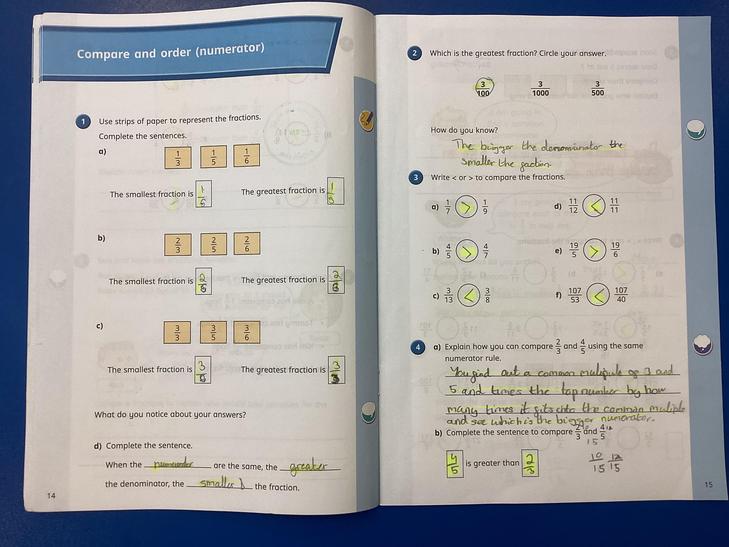
- Compare and order fractions whose denominators are all multiples of the same number.
- Identify, name and write equivalent fractions of a given fraction, represented visually, including tenths and hundredths.
- Recognise mixed numbers and improper fractions and convert from one form to the other and write mathematical statements > 1 as a mixed number.
- Add and subtract fractions with the same denominator and denominators that are multiples of the same number.
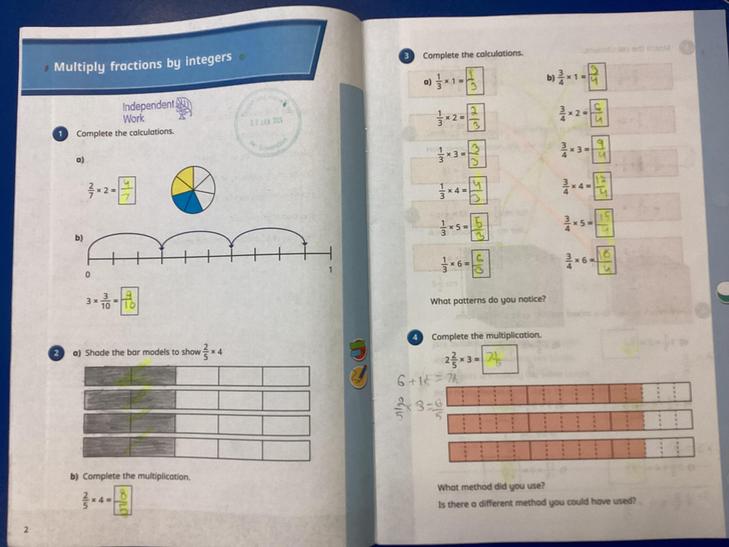
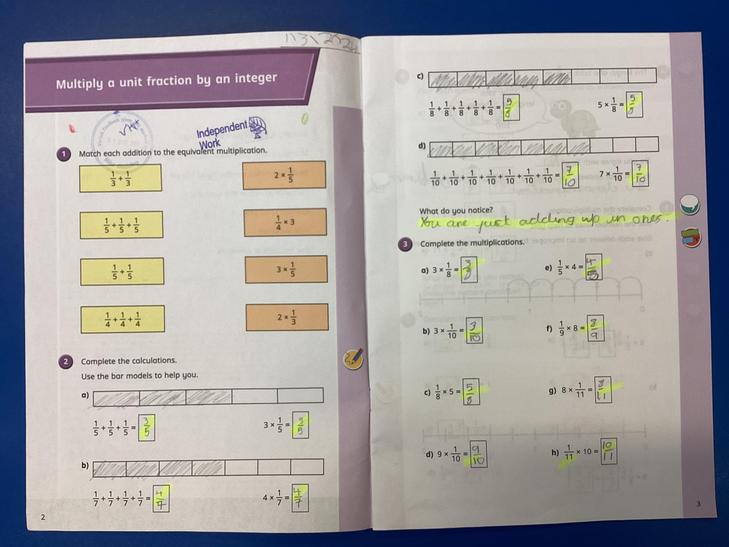
- Multiply proper fractions and mixed numbers by whole numbers, supported by materials and diagrams.
- Read and write decimal numbers as fractions
Year 6
- Use common factors to simplify fractions; use common multiples to express fractions in the same denomination.
- Compare and order fractions, including fractions > 1.
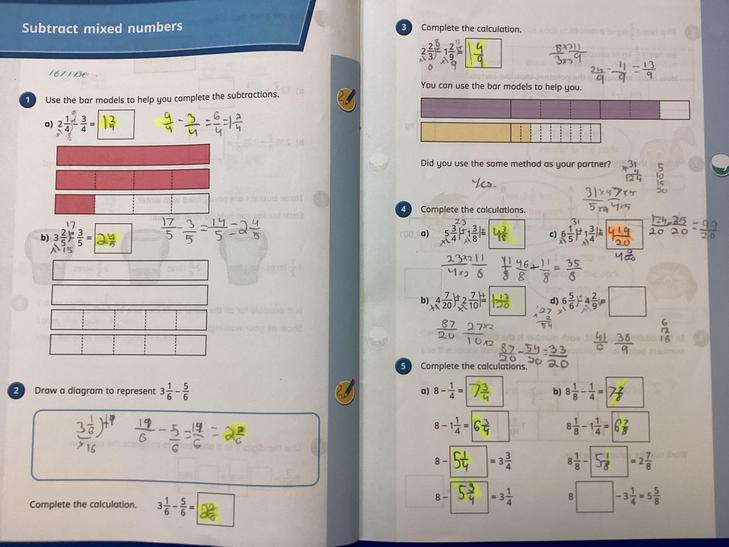
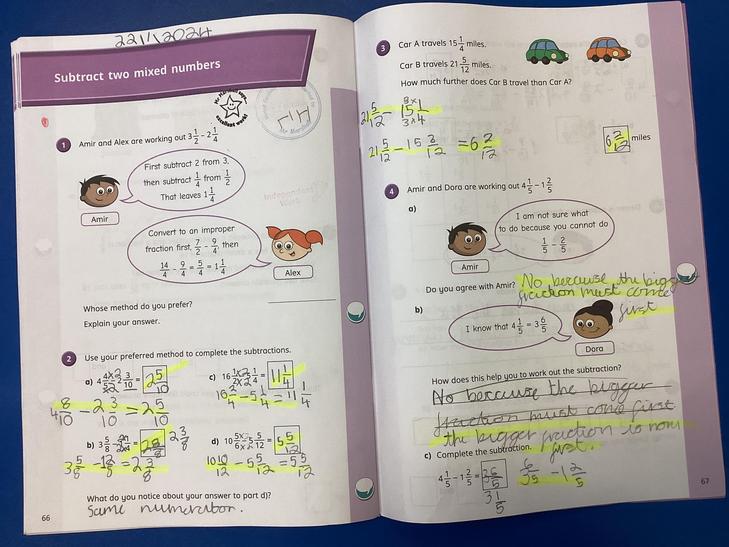
- Add and subtract fractions with different denominators and mixed numbers, using the concept of equivalent fractions.
- Multiply simple pairs of proper fractions, writing the answer in its simplest form.
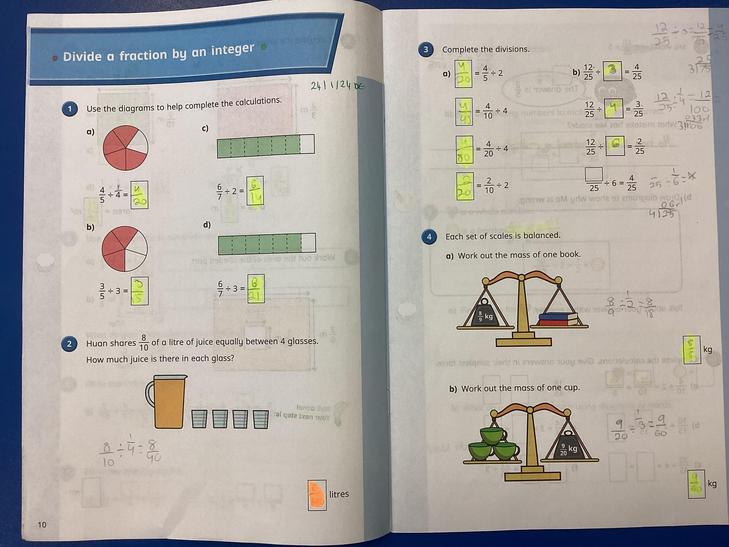
- Divide proper fractions by whole numbers.
- Associate a fraction with division and calculate decimal fraction equivalents.
- Identify the value of each digit in numbers given to three decimal places and multiply and divide numbers by 10, 100 and 1000 giving answers up to three decimal places.
- Multiply one-digit numbers with up to two decimal places by whole numbers.
- Use written division methods in cases where the answer has up to two decimal places.
- Solve problems which require answers to be rounded to specified degrees of accuracy.
- Recall and use equivalences between simple fractions, decimals and percentages, including in different contexts.